S1/E6: Rishimukha — Two Geese Beside the Crossing
Rishimukha, near Anegundi and Hampi, Karnataka
Watch the S1/E6 field reel:
Before the crossing
Akul and I were about to cross the narrow log bridge to Rishimukha when two white waterbirds appeared beside it. They called to each other, moved through the shallows and seemed completely unbothered by us.
In the moment, we called them ducks. A viewer later asked the right question: ducks—or geese?
Looking again at the original footage, the long curved necks, large bodies and orange-yellow bills identify them as domestic geese, not ducks. They resemble an Embden-type domestic goose, although the footage is not sufficient to assign a breed with certainty.
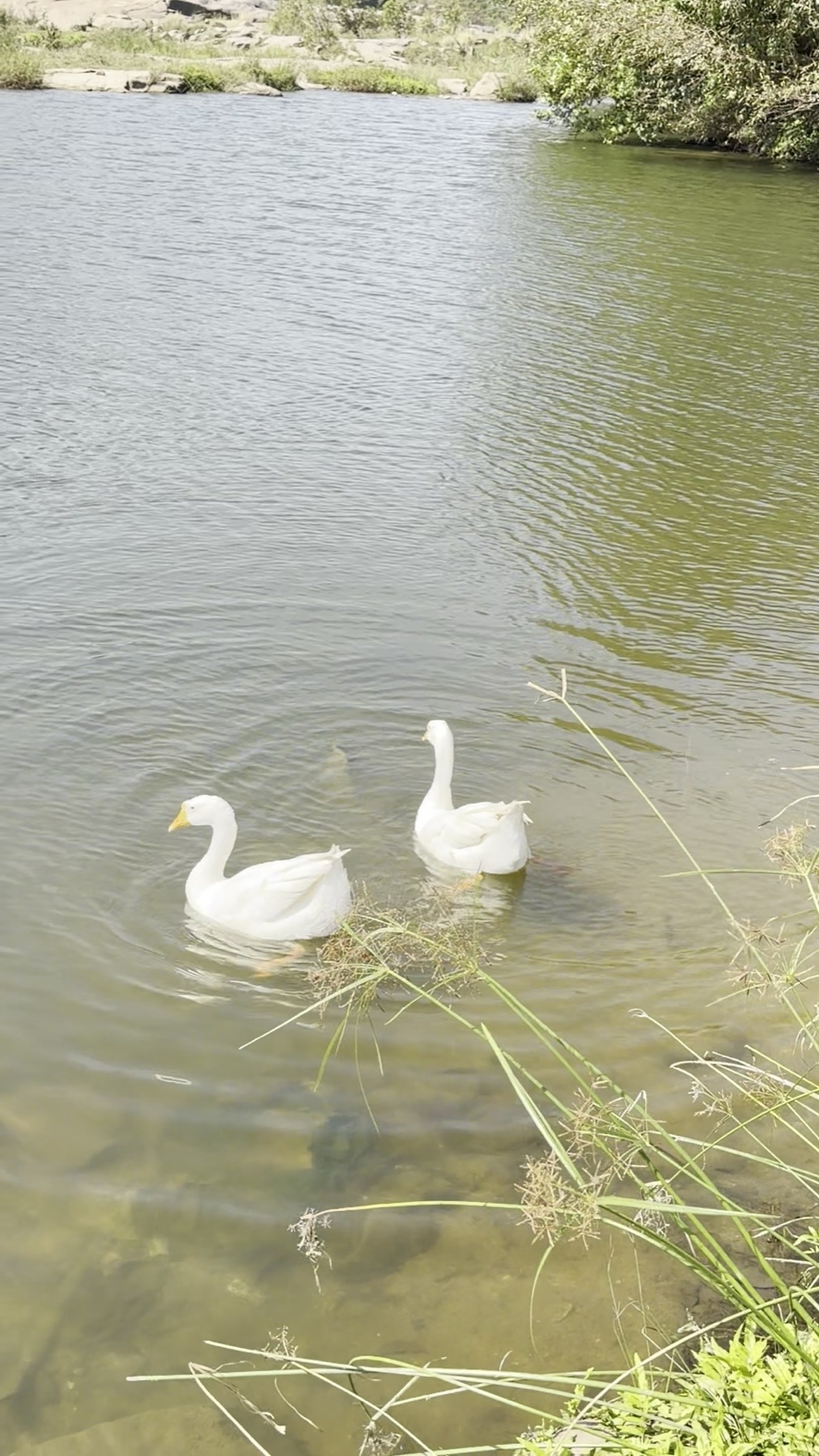
The correction does not diminish the encounter. It makes the field record more precise: two geese, entirely unplanned, became the quiet opening to our return to Rishimukha.
The crossing to Rishimukha
On our visit, the route across was a narrow log crossing. It was too tight to stop and photograph while stepping over it safely; you had to concentrate on the crossing itself.
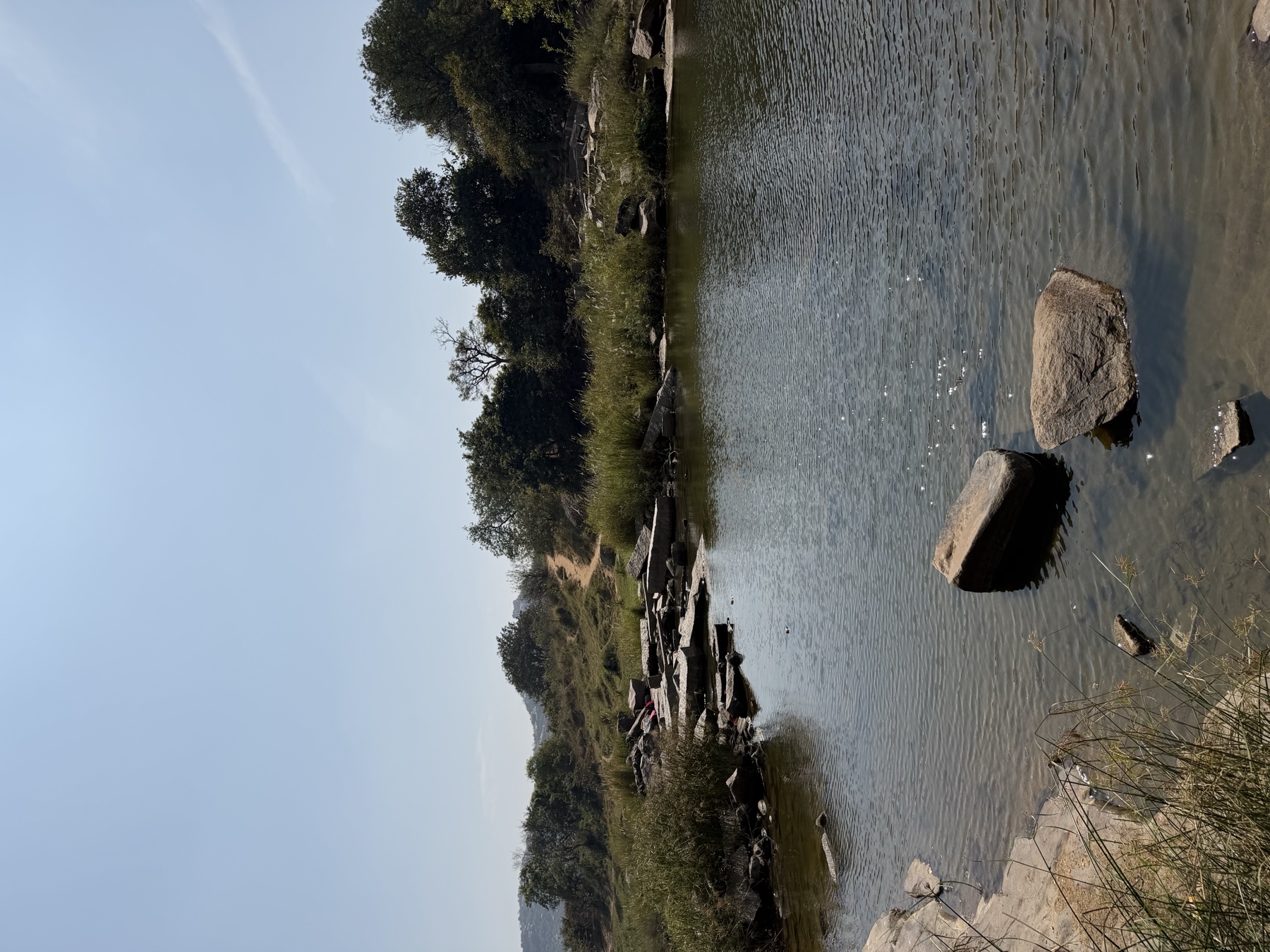
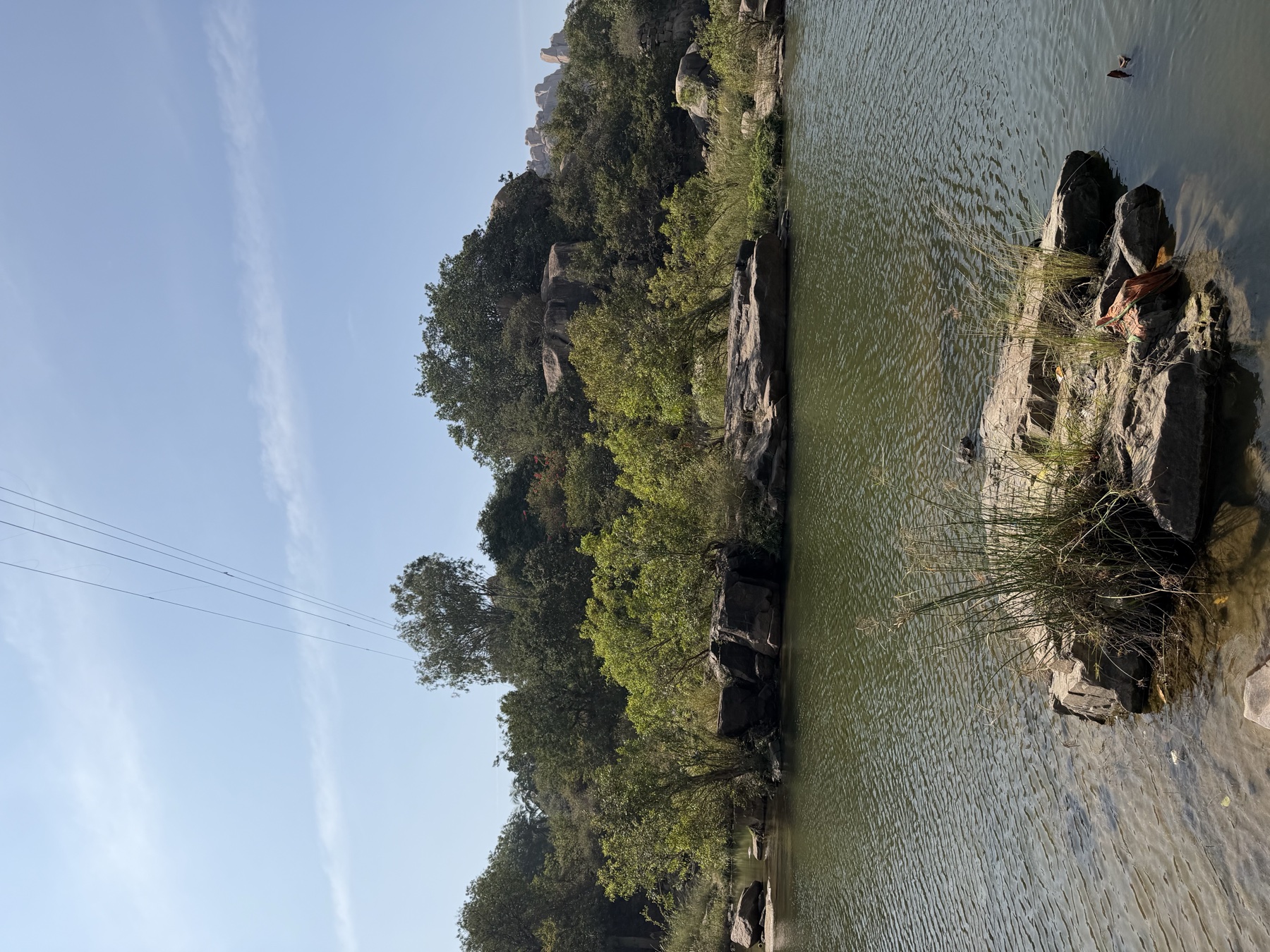
Local tradition identifies this as the landscape where Sugriva and Hanuman remained beyond Vali's reach. In the Ramayana account, Sita drops ornaments to the vanaras below while Ravana carries her south, and Sugriva later shows those ornaments to Rama. The Rishimukha tradition connects that remembered episode to this terrain.
The wider river landscape is associated with Pampa in the sacred geography of the Ramayana. Today the great river running through the Hampi region is the Tungabhadra, while Pampa Sarovar is a distinct nearby sacred water body. The old and present names should be read carefully rather than treated as interchangeable labels for every pool and channel in the area.
A return with Akul
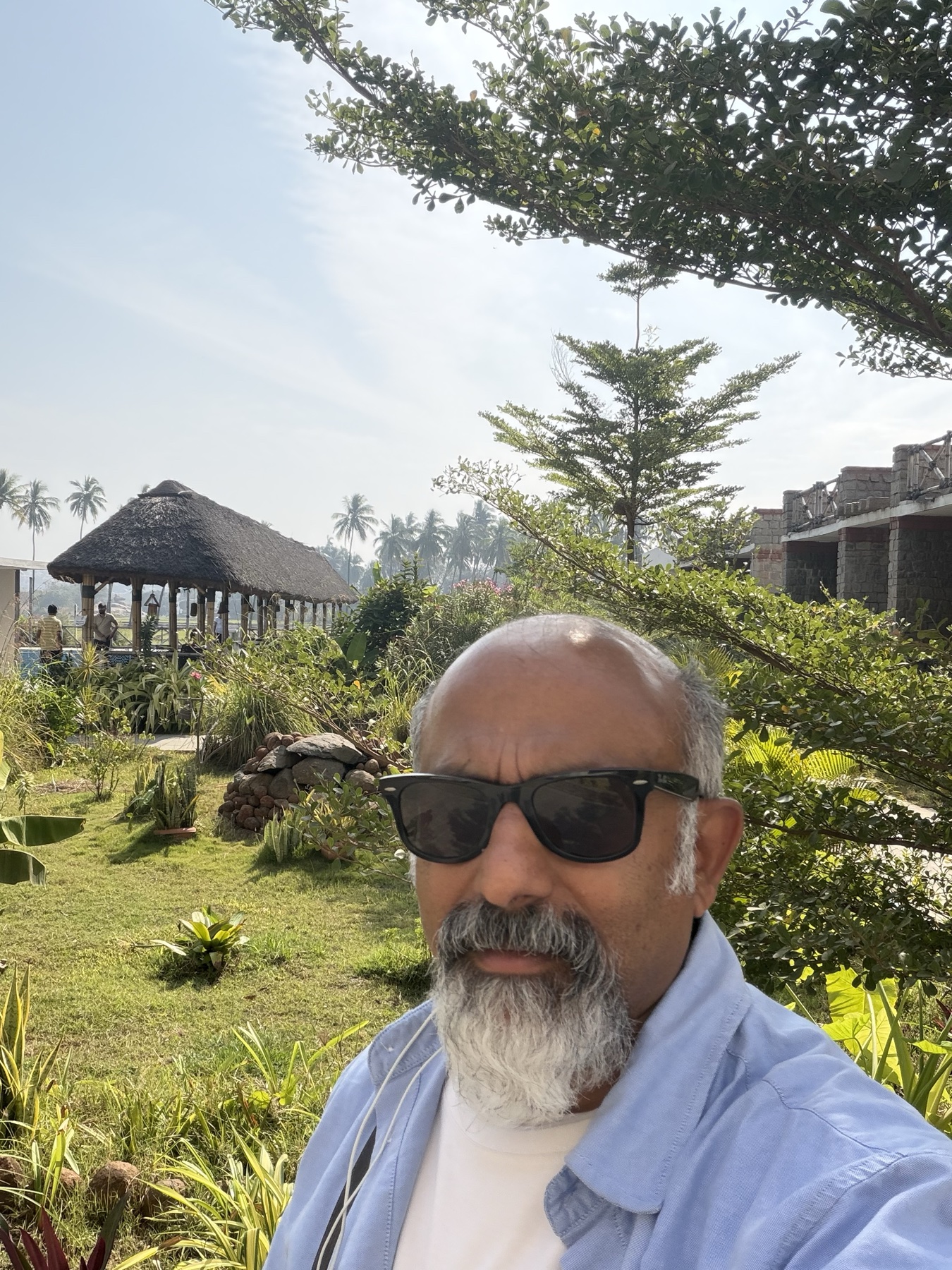
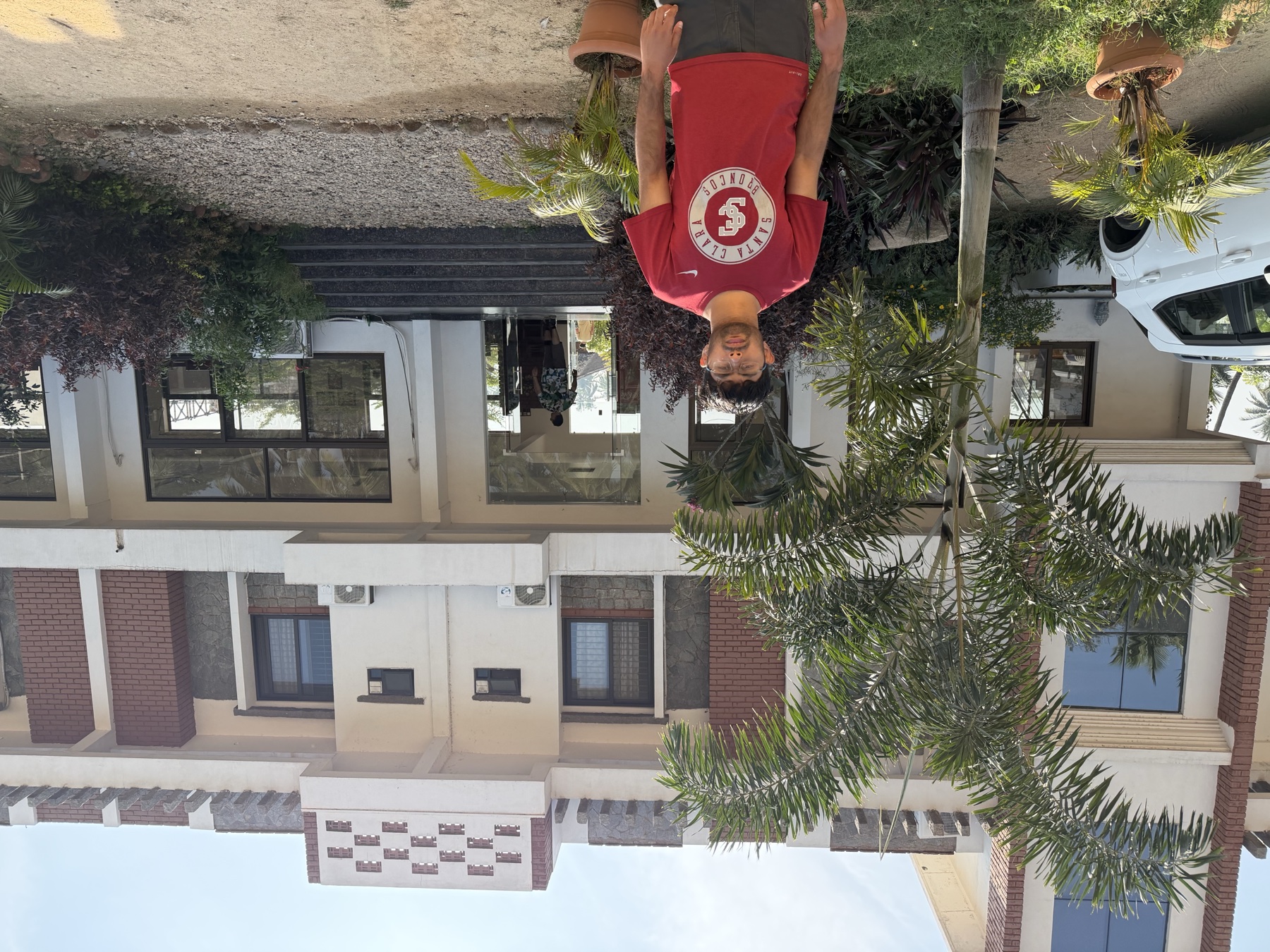
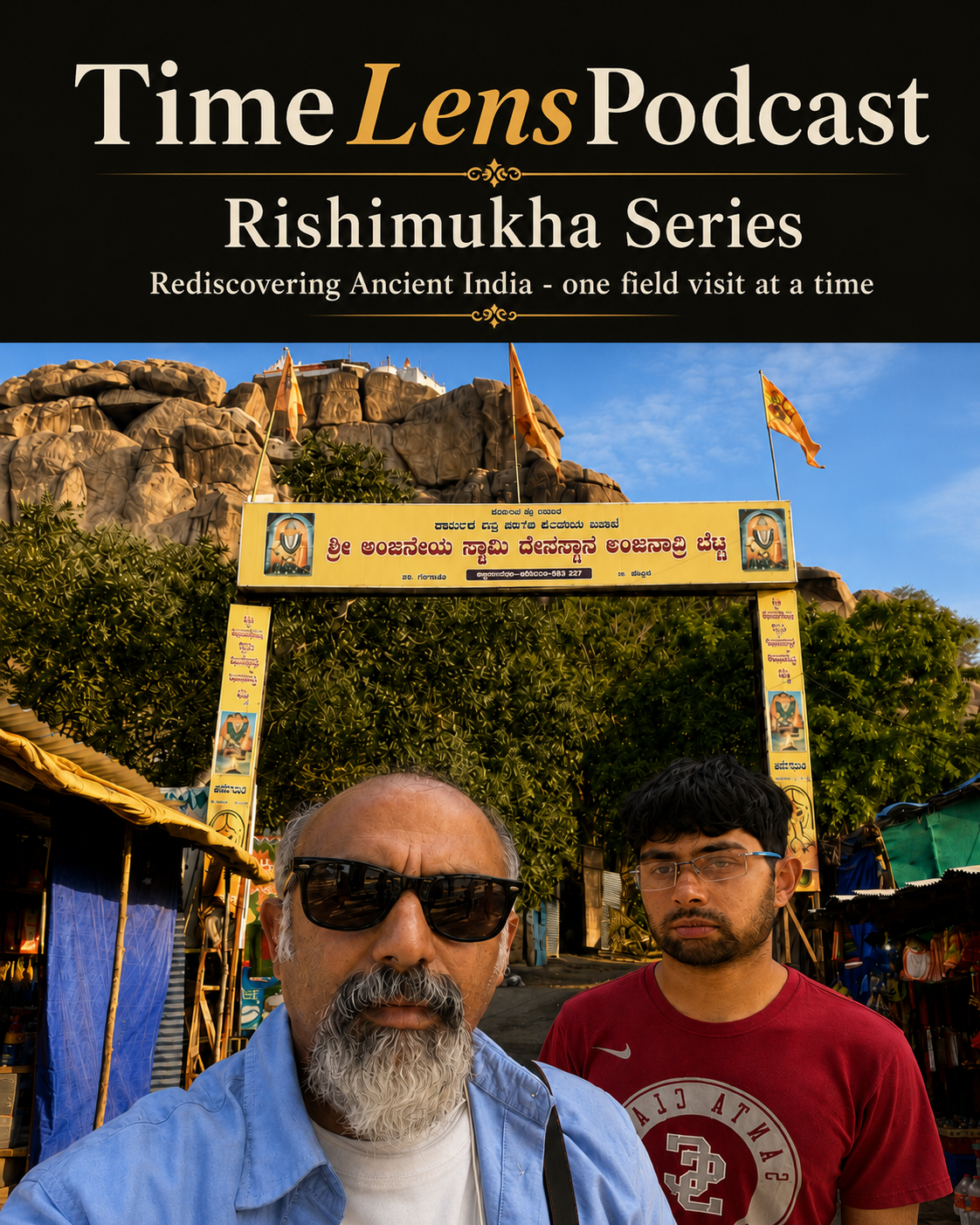
I had first seen this place alone in April 2025. Returning with Akul changed the visit. This time the journey was shared: the Anjanadri climb, the route across the water and the arrival at Rishimukha.
After the roughly 575 steep steps of Anjanadri Hill, the nearby coffee stop was not a luxury. It was recovery.
Lipi and Nambikke
There was no inscription beside the geese explaining what the place meant. There did not need to be.
Lipi is knowledge made visible in writing: inscriptions, plaques, dates and names.
Nambikke is knowledge carried by place, memory and repeated practice. At Rishimukha, it lives in the name, the route, the stories told locally and the way visitors continue to cross into this landscape.
The two geese belonged to neither category. They were simply there—calling across the water while an ancient story remained attached to the rocks around them.
What the field record establishes
- Two white domestic geese were present beside the crossing during our visit.
- The original natural audio records their calls, other birds and our conversation in the background.
- A narrow crossing provided access during our visit; conditions and access may change seasonally.
- The physical setting joins water, granite hills and vegetation in the landscape traditionally associated with Rishimukha and Kishkinda.
- The Ramayana association is a living place tradition, not archaeological proof that a specific event occurred at an identifiable modern spot.
Travel information
Location: Rishimukha, in the Anegundi–Hampi area of Karnataka.
Access: Check locally before setting out. Water levels and crossing conditions can change. Do not attempt a narrow or wet crossing if it appears unsafe.
Nearby: Anjanadri Hill, traditionally identified as Hanuman's birthplace, is approached by a steep climb commonly described as about 575 steps.
Bring: Water, sun protection and footwear with reliable grip.
Wildlife and domestic animals: Observe quietly, do not chase or crowd the birds, and do not feed them without the caretaker's permission.
Rishimukha Flashback Series
- S1/E1 — Jatayu, Rishimukha and Rama's Two Trails
- S1/E2 — Hanuman's Birthplace Has a Back Route
- S1/E3 — Kishkinda: The Monkey Kingdom
- S1/E4 — The Squirrels Still Chat at Kishkinda
- S1/E5 — The ASI Board and the Living Kingdom
- S1/E6 — Rishimukha: Two Geese Beside the Crossing ← you are here
Watch S1/E6 on Instagram and follow the continuing series at @timelenspodcast.


Comments
Post a Comment