S1/E5: ASI Board Says: “Anjaneya Was Born Here, in a Kingdom Called Kishkinda”
Anjanadri Hill, Hampi, Karnataka
The sentence at the base of the hill
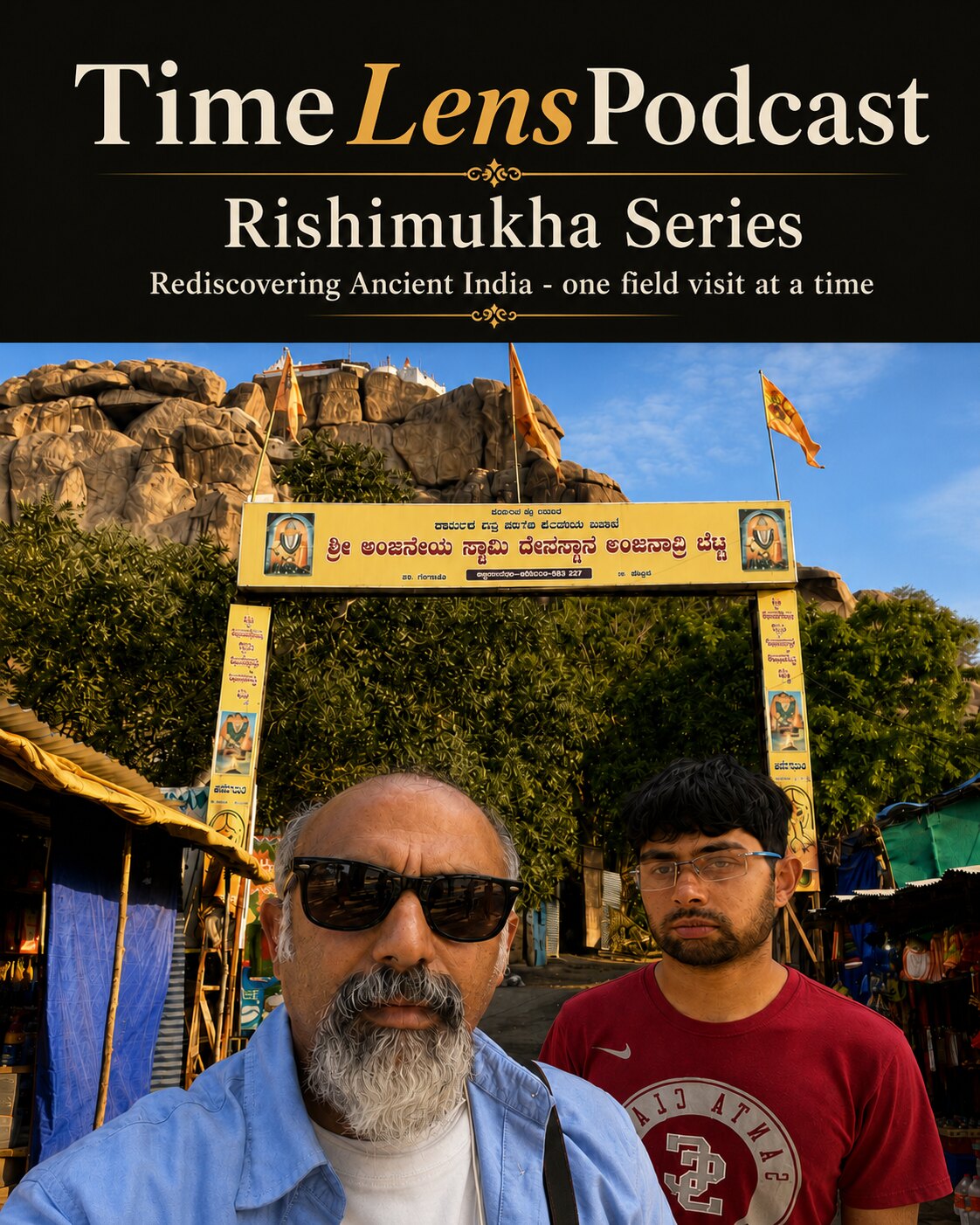
At the base of Anjanadri Hill, a permanent interpretive plaque begins with a remarkable sentence:
“According to folklore, Anjaneya was born here, in a kingdom called Kishkinda.”
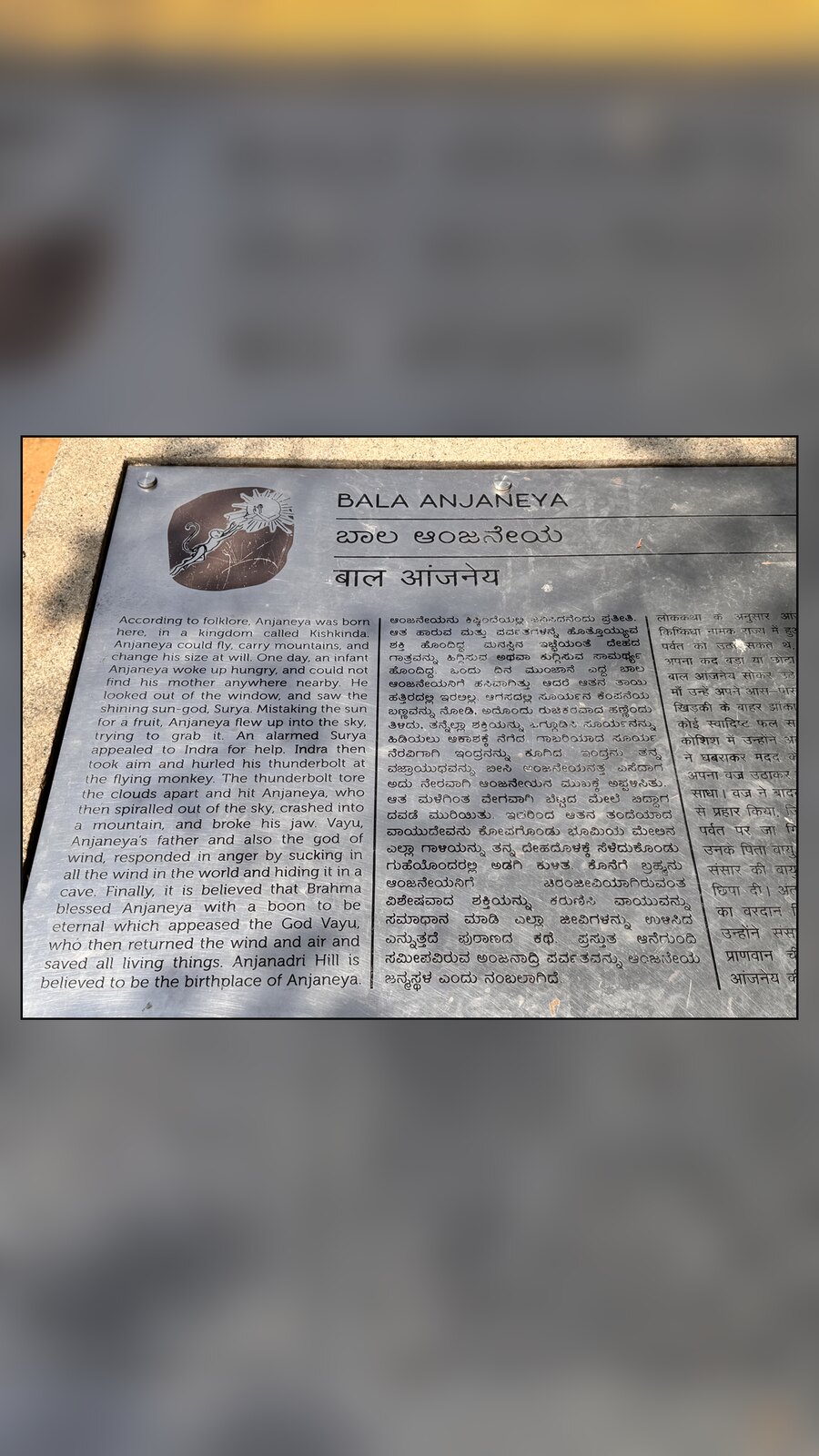
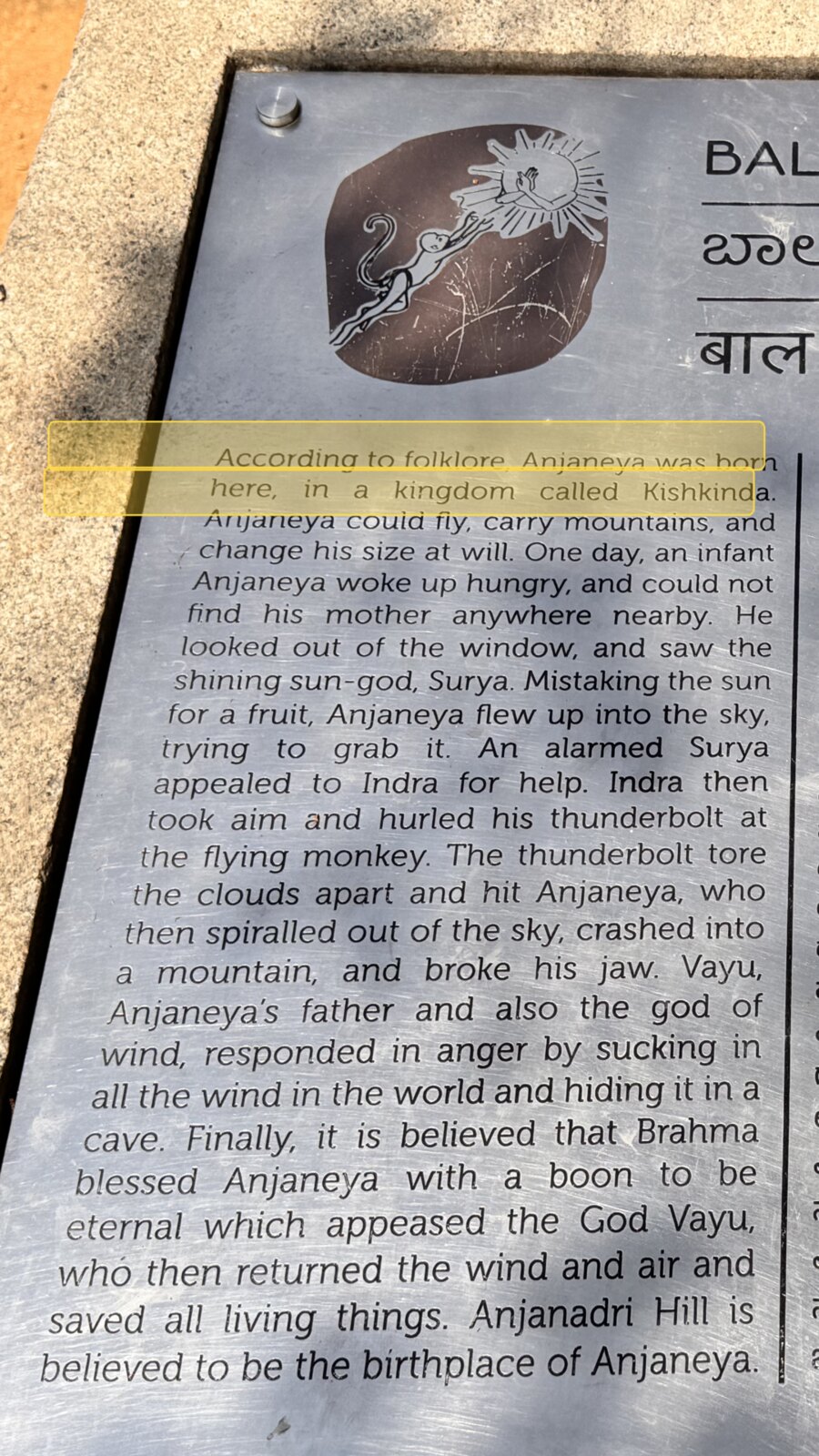
The wording matters. The plaque does not present an archaeological proof of Hanuman’s birth. It records the place tradition carefully and explicitly: according to folklore, this hill is Anjaneya’s birthplace, and the surrounding kingdom is Kishkinda.
That distinction makes the sign more useful, not less. It tells us exactly what kind of evidence it preserves: an official, permanent record of the tradition attached to this landscape.
Watch the S1/E5 field reel:
The evening before
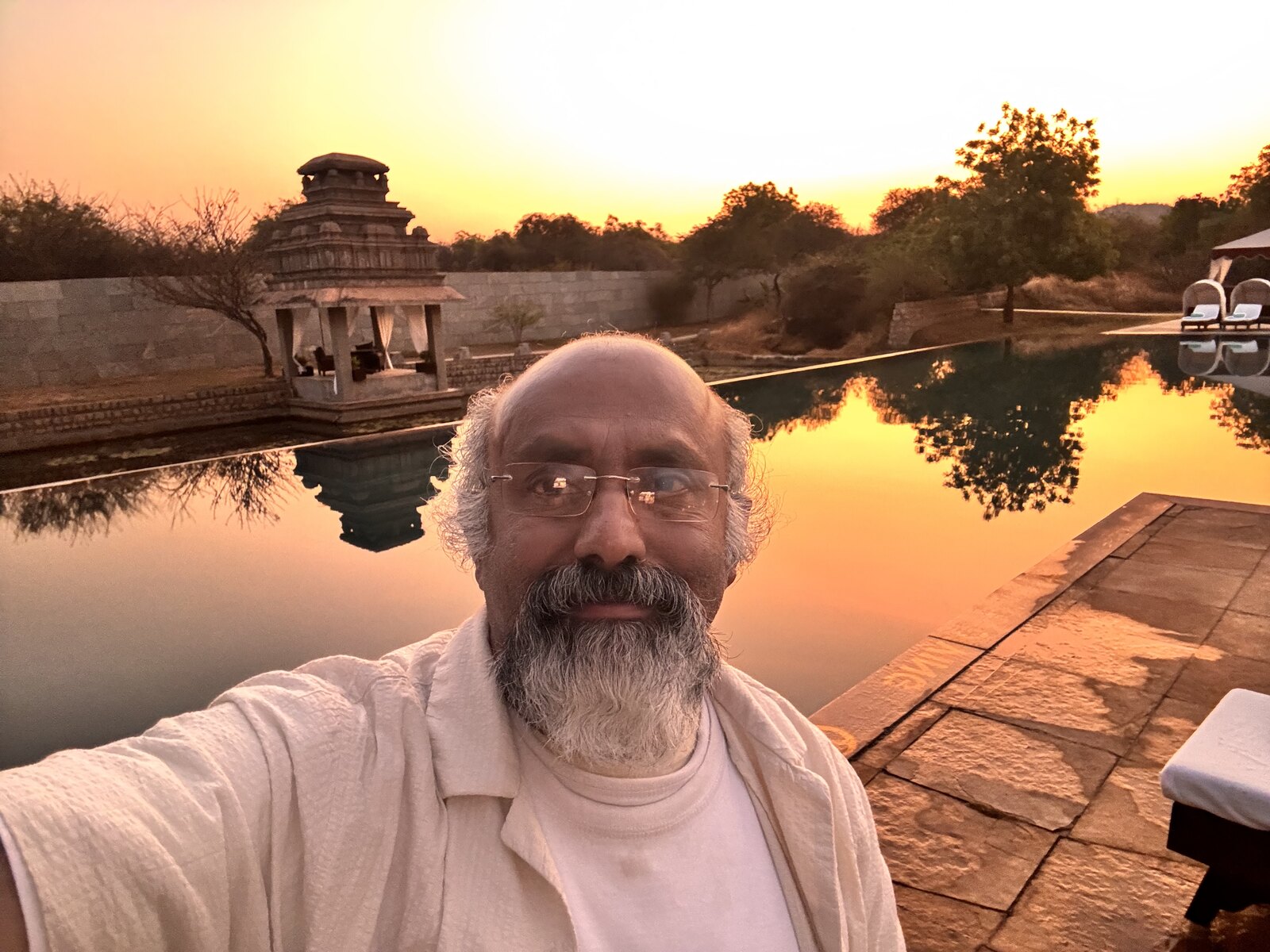
I arrived at Evolve, Hampi, the evening before the climb. The sun was setting behind the stone pavilion and reflecting across the water.
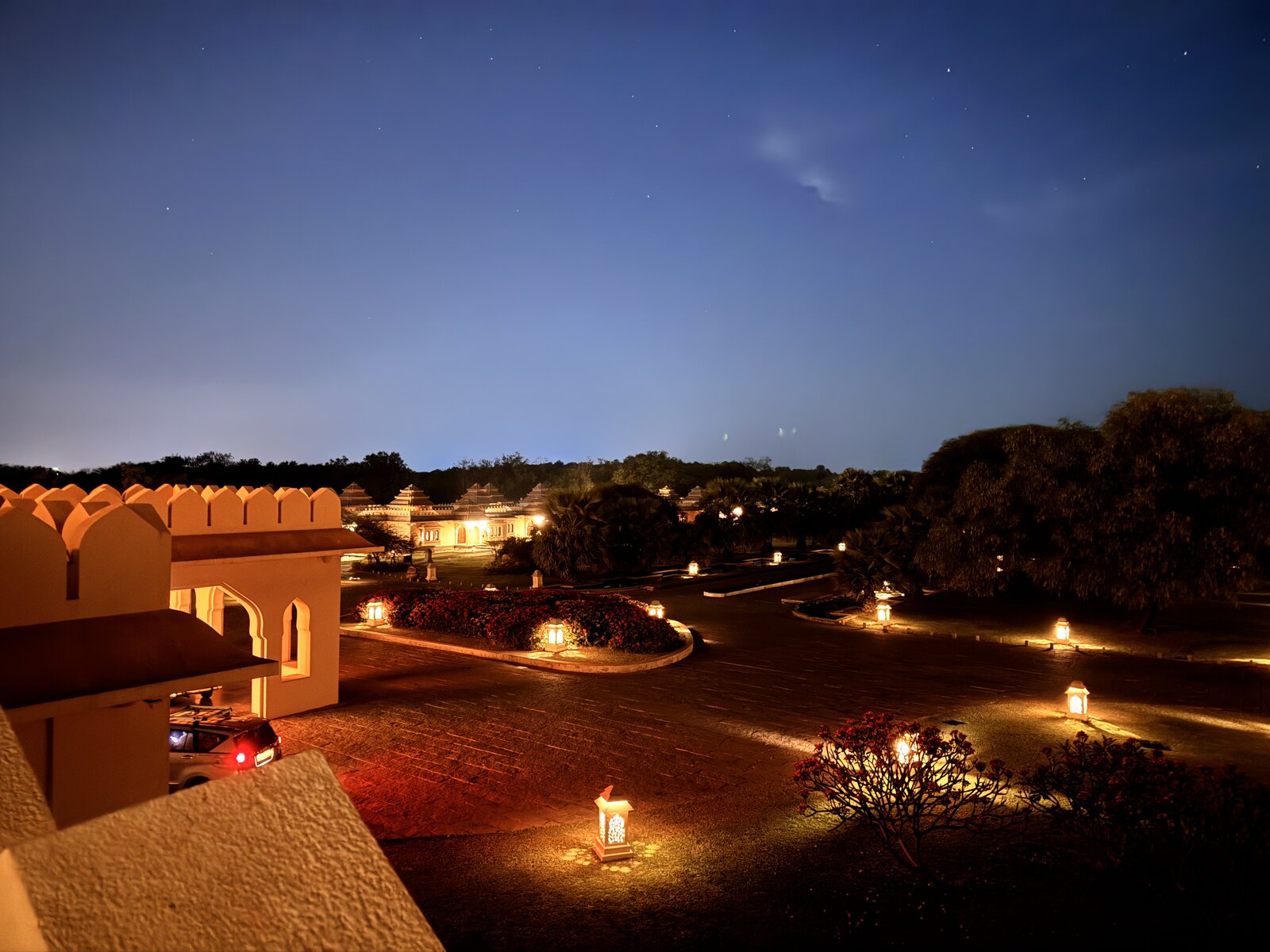
The next morning I was awake at 5 a.m. It was still dark. I wanted to reach the base of Anjanadri Hill early, before the steps and exposed rocks became hot.
By about 7:30 a.m., the welcome arch, the plaque and a small temple at the foot of the hill were in front of me.
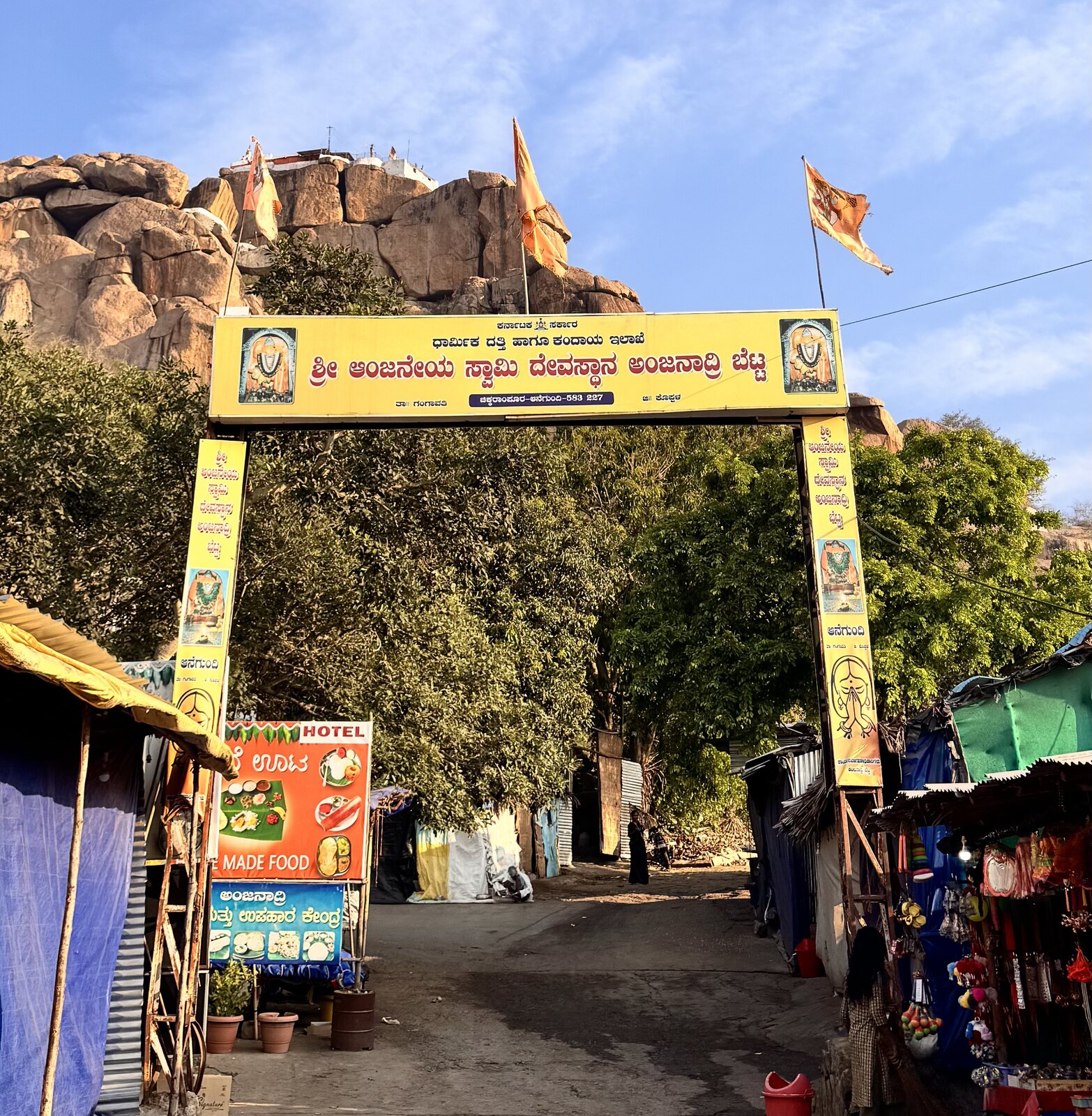
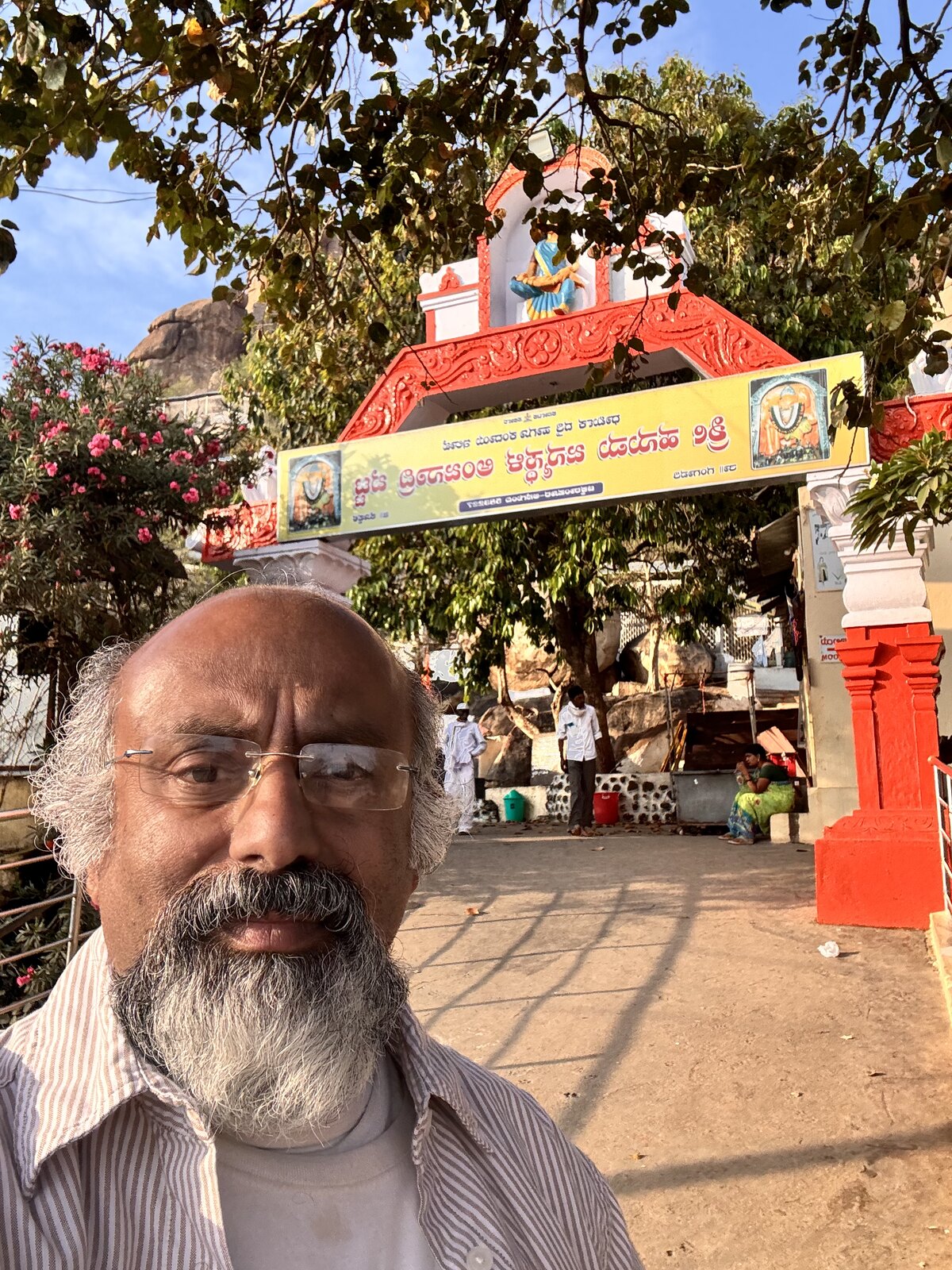
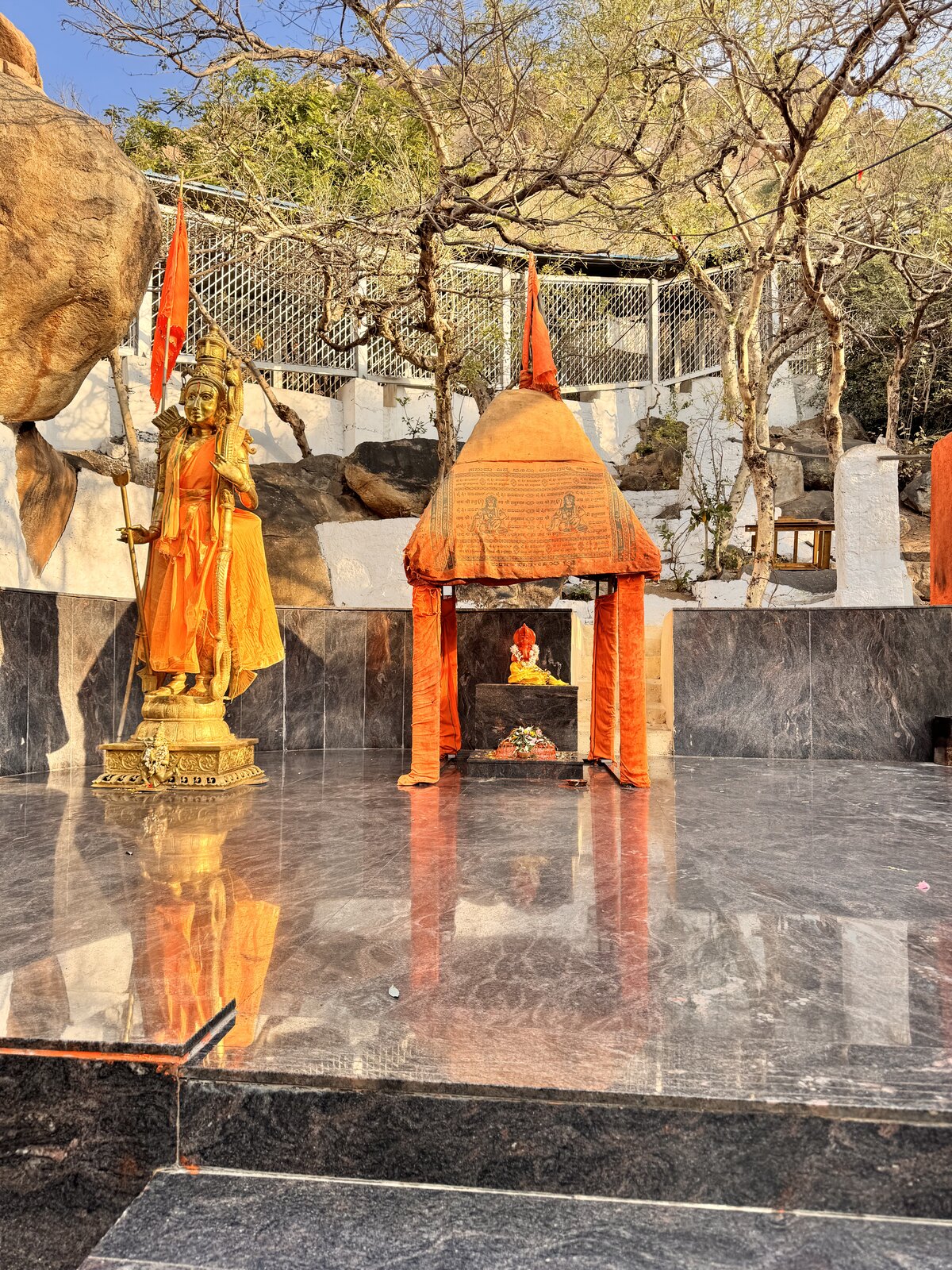
The climb begins there.
The climb
The front route has roughly 570–575 steep steps. It is a direct climb, and it rewards preparation: begin early, carry water and allow time to stop.
The pauses are part of the experience. Squirrels move through the trees beside the route. Monkeys watch from branches and boulders. Openings between the rocks reveal cultivated fields, settlements, the Tungabhadra and the broken granite hills around Hampi.
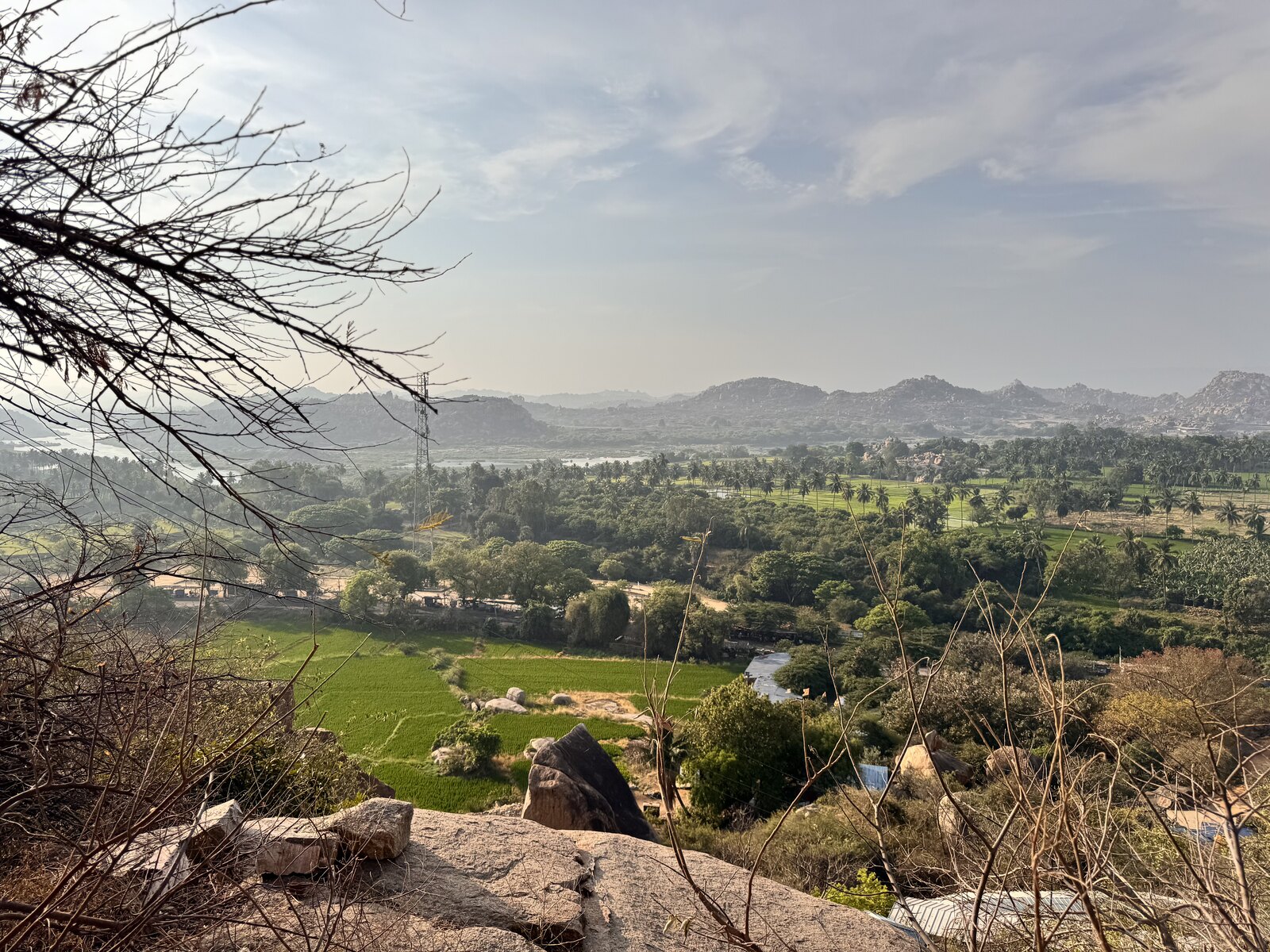
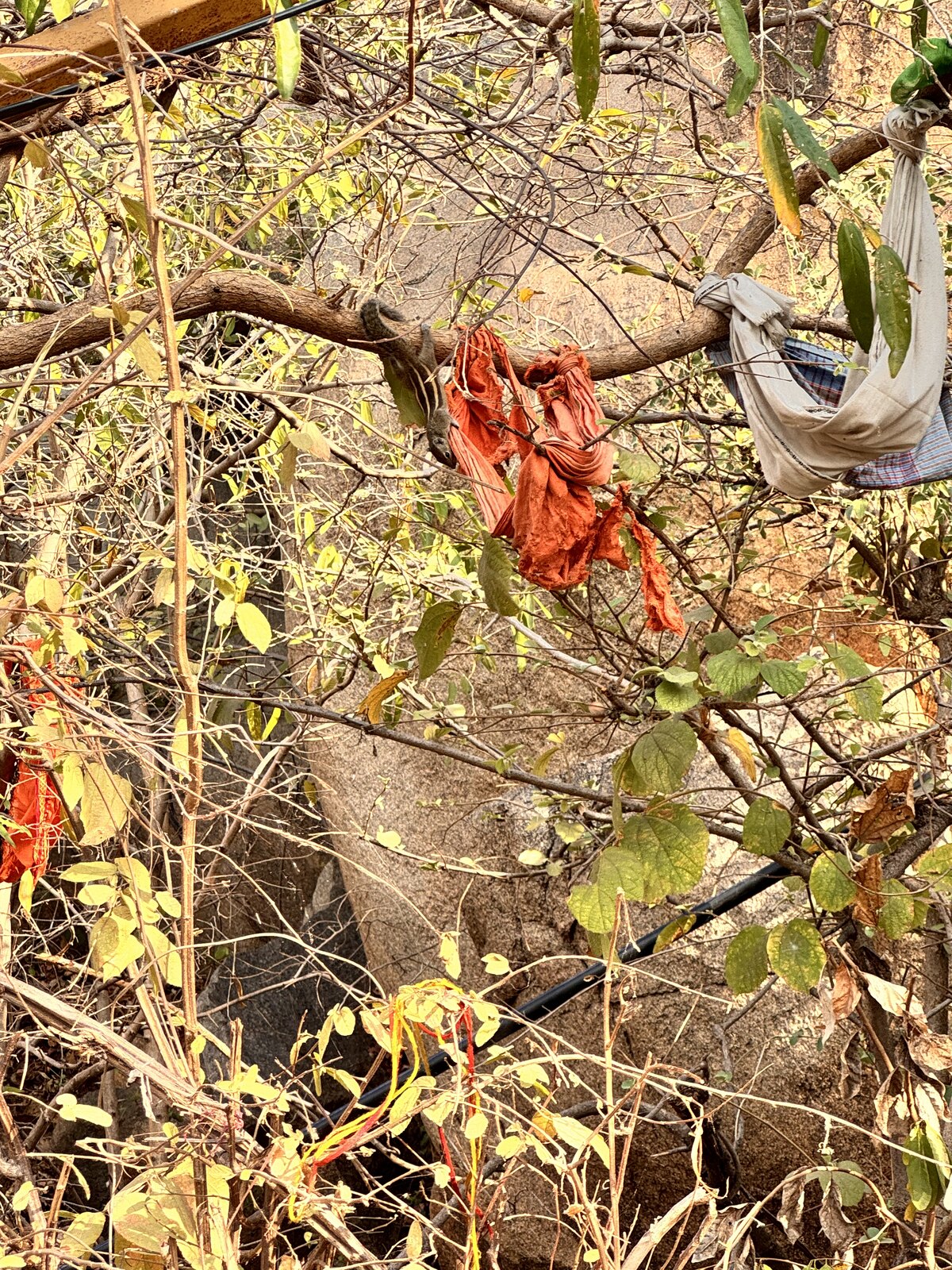
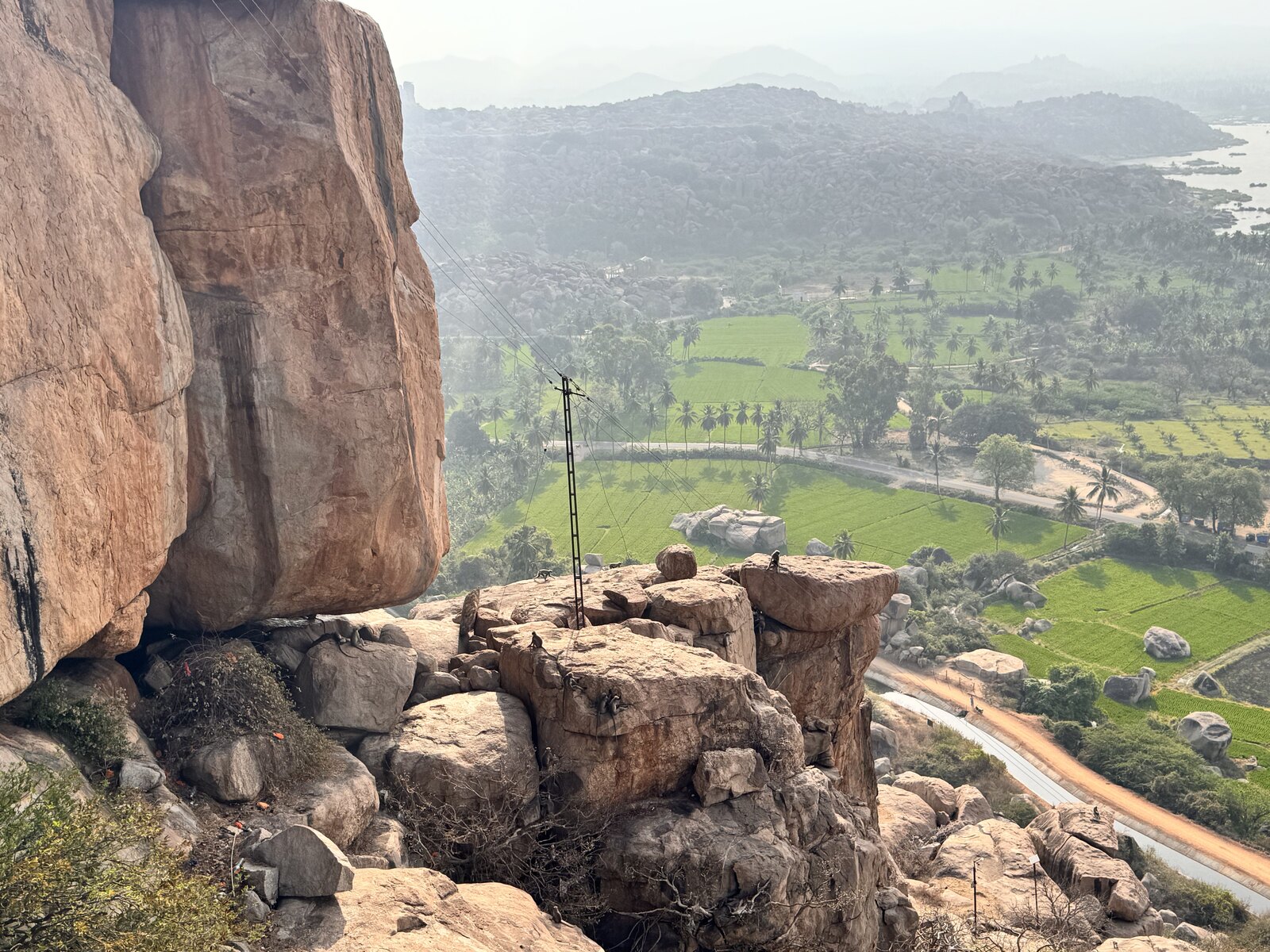
This is not scenery placed behind the story of Kishkinda. The landscape is one of the ways the story has remained attached to a real place.
The river and the landscape
From the climb, the Tungabhadra appears between green fields and boulder hills. Official district material describes Pampa as an ancient and Puranic name of the Tungabhadra; the wider sacred geography also includes nearby Pampa Sarovar.
The short field video below records that view while climbing Anjanadri Hill.
Watch — the Tungabhadra and the landscape of Kishkinda:
UNESCO’s description of Hampi emphasises the same physical setting: the Tungabhadra River, craggy hill ranges and open plains. From Anjanadri, those elements are not separate. River, fields, rocks and shrines form one continuous view.
At the summit
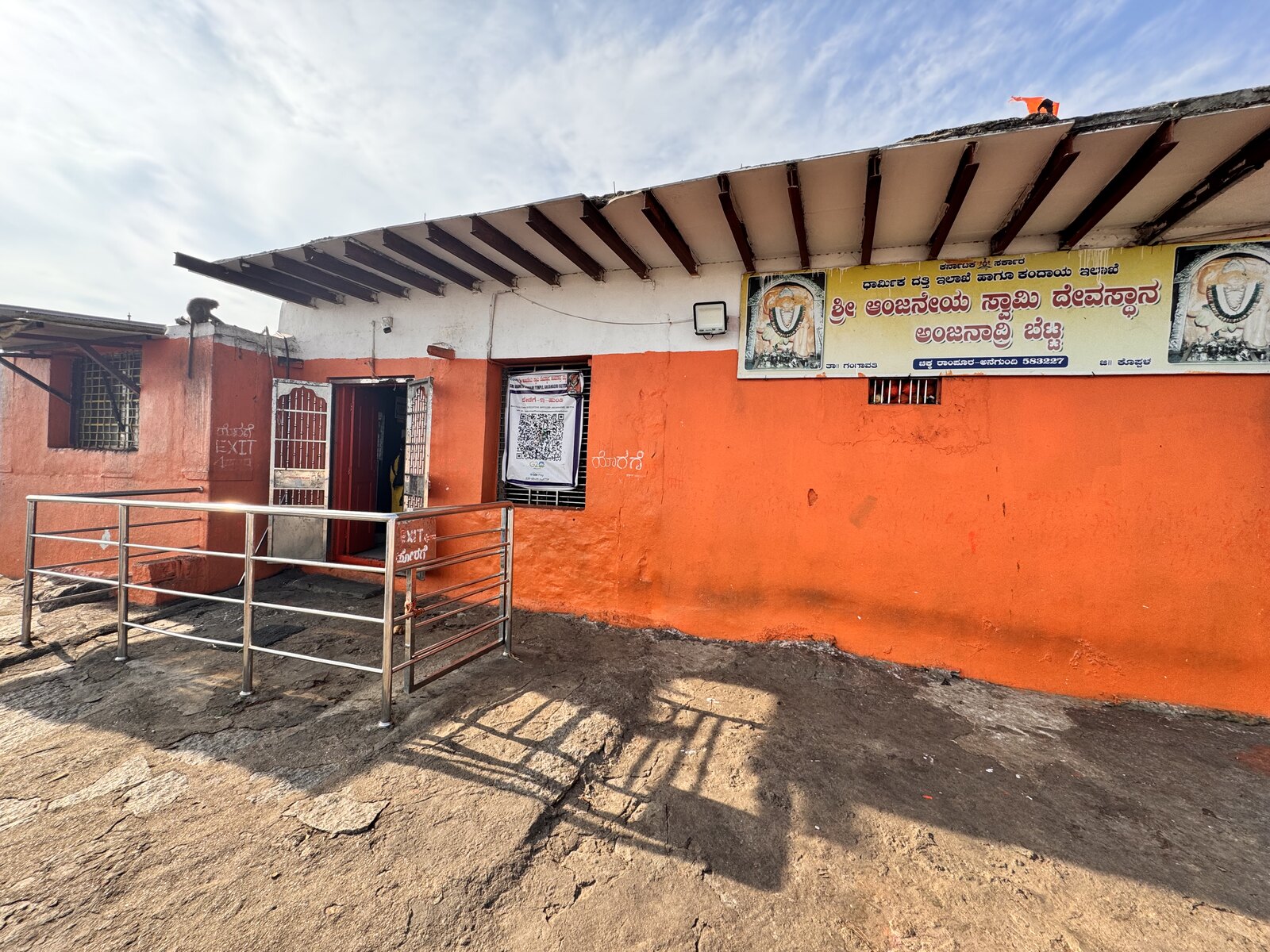
At the top is the small Anjaneya temple. The final steps open onto rock, sky and a panoramic view across the region traditionally identified with Kishkinda.
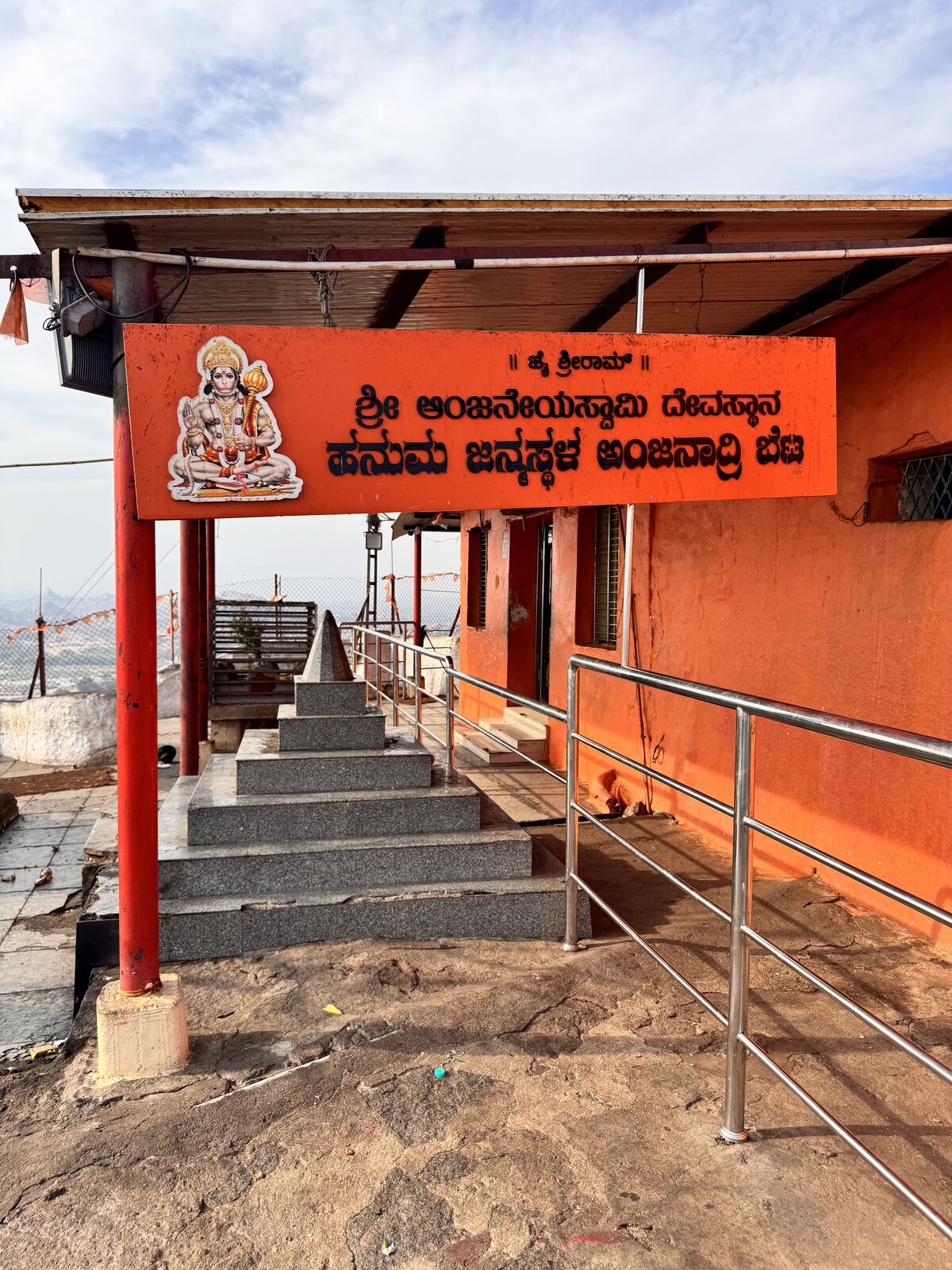
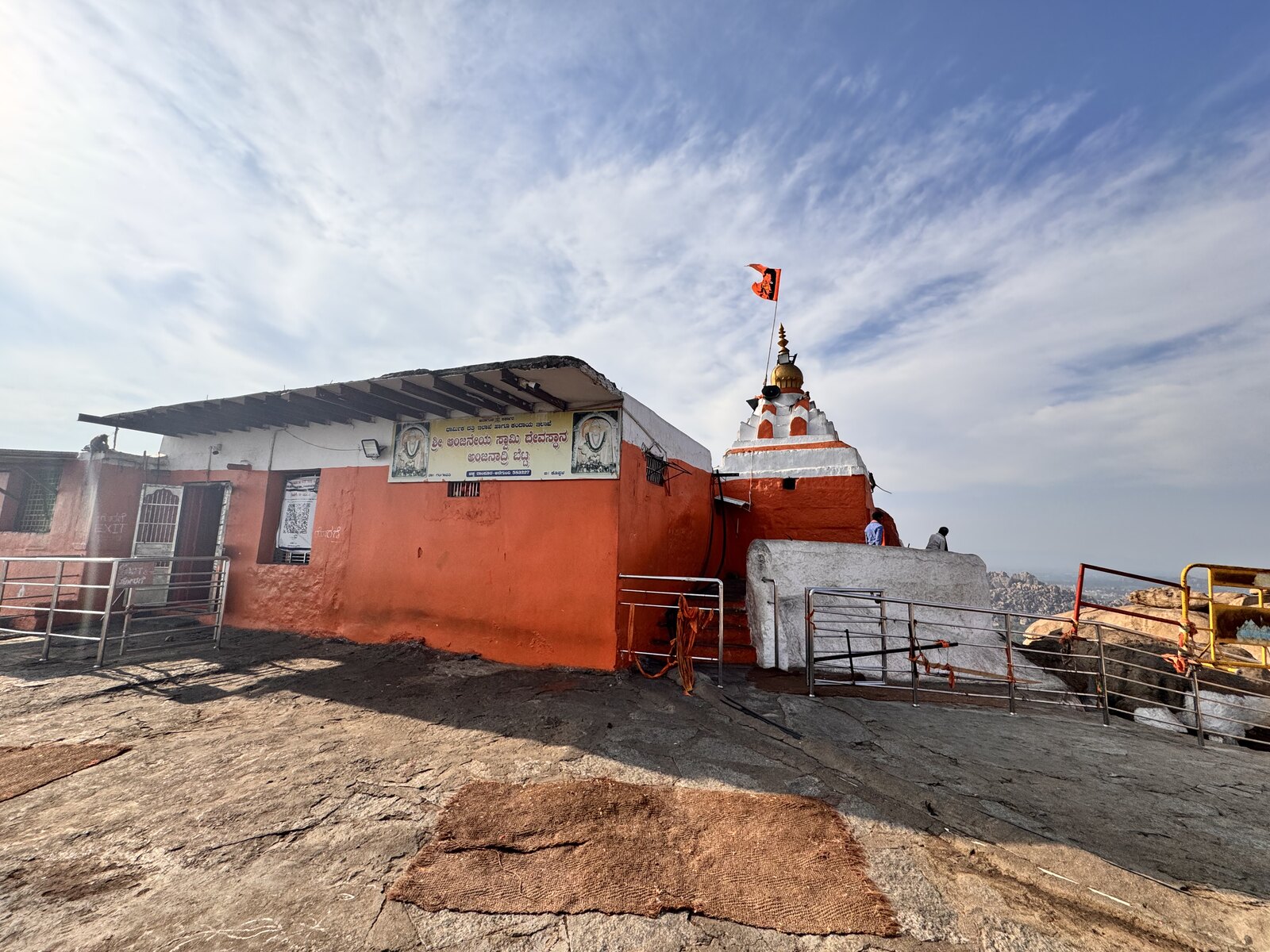
The monkeys are still present at the summit. In the footage, an adult pair and young monkeys sit together among the rocks. I call them King, Queen and siblings because of the family hierarchy the scene suggested to me—not as a scientific identification of their biological ranks.
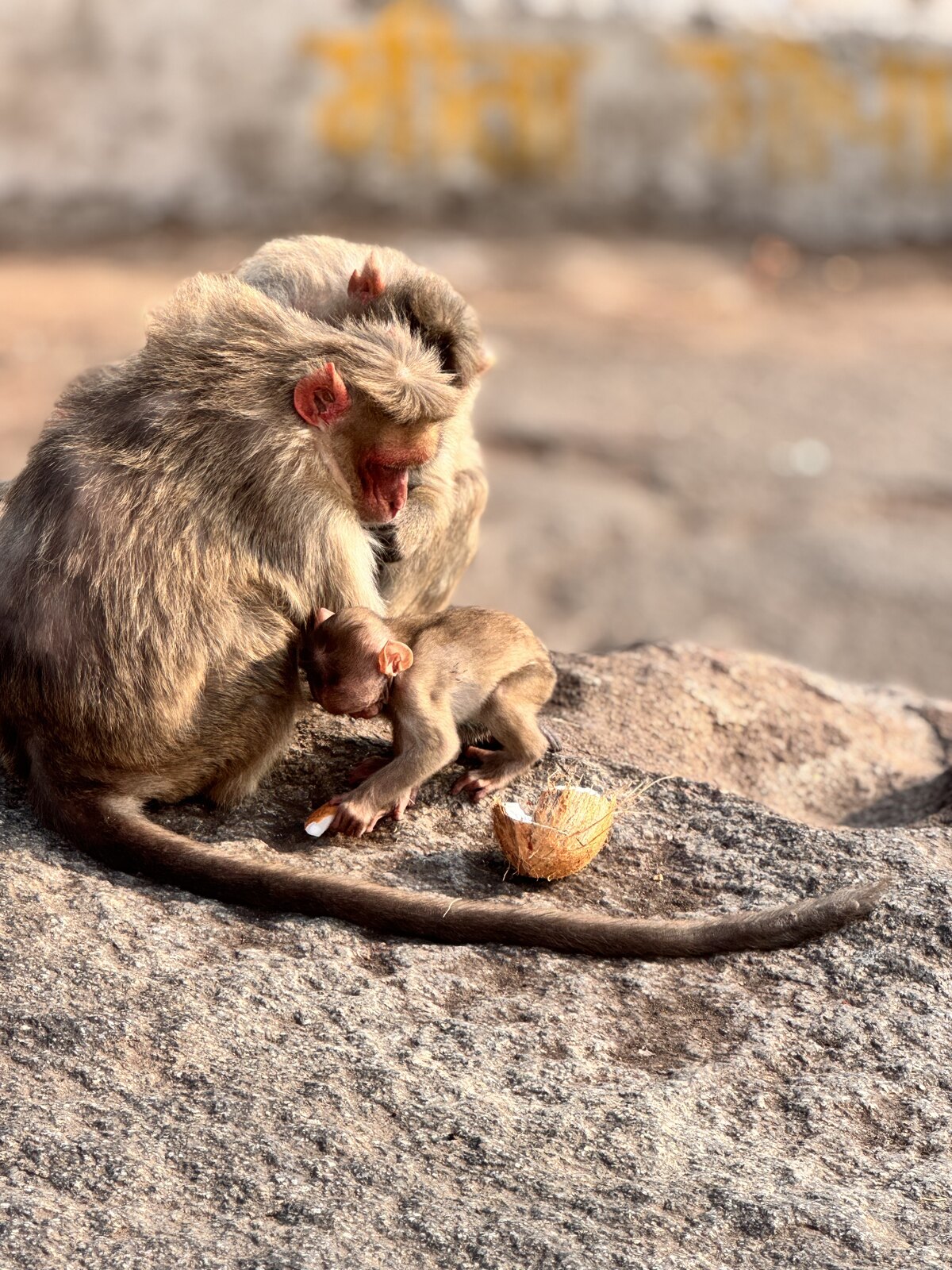
The longer King, Queen, children and soldier-monkey sequence is documented in the related field notes: S1/E3 — Kishkinda: The Monkey Kingdom.
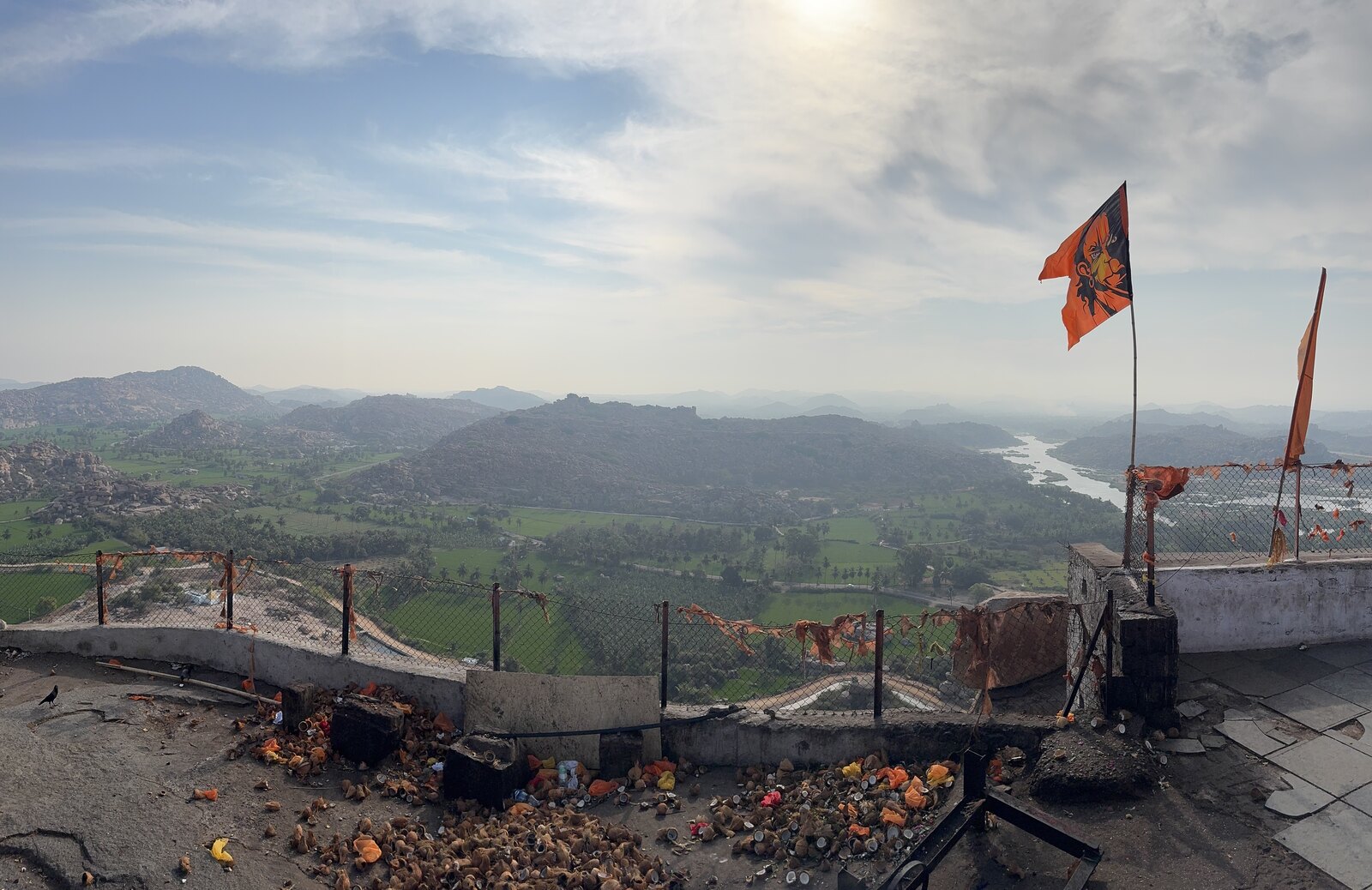
The camera shows a monkey family inhabiting the summit. The Ramayana connection is an interpretation shaped by the location and its remembered name.
Lipi and Nambikke
I sat on a hillock at the top and looked down over the landscape for a long time.
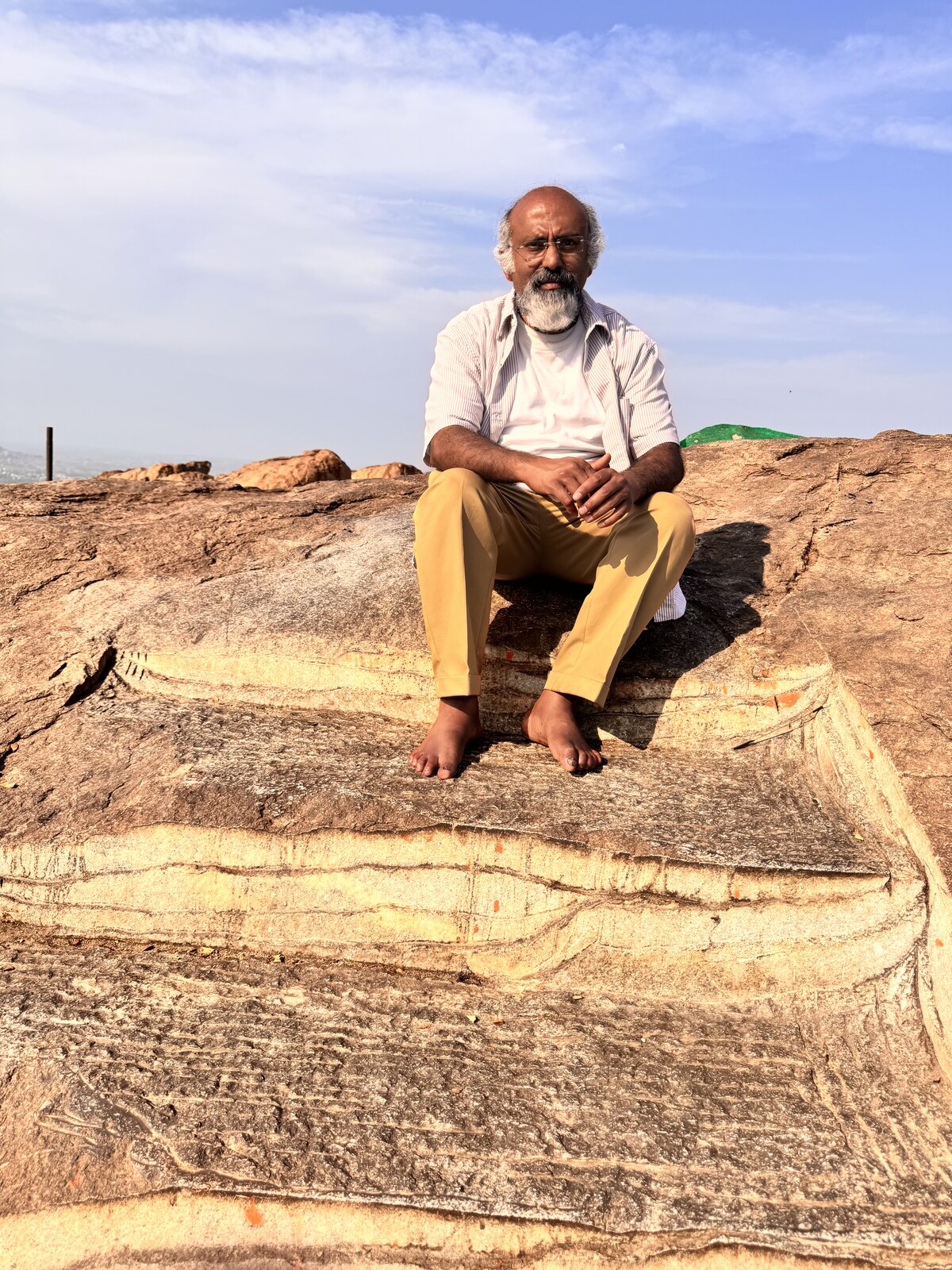
At the base, the plaque had supplied the Lipi: words made visible and permanent.
At the summit, the inhabited hill supplied the Nambikke: knowledge carried by place, memory, repeated practice and living presence.
The Lipi says that folklore places Anjaneya’s birth here, in Kishkinda.
The Nambikke lives in the climb, the names, the temple, the monkeys, the Tungabhadra and the boulder landscape that still surrounds them.
They are not identical kinds of evidence. They do not need to be confused to be read together.
What the field record establishes
The photographs and videos establish several things directly:
- a permanent plaque at the base records the Anjaneya and Kishkinda tradition;
- the climb leads through a living river-and-boulder landscape;
- a temple dedicated to Anjaneya stands at the summit;
- monkeys continue to inhabit the hill and its rocks;
- and the panoramic view connects Anjanadri visually with the Tungabhadra basin around Hampi.
The field record does not archaeologically prove an episode of the Ramayana. It documents something different: the continuity between a named tradition, an official interpretive sign, a living pilgrimage site and the physical landscape to which the tradition belongs.
Travel information
Location: Anjanadri Hill, also called Anjaneya Hill, near Anegundi and Hampi in Koppal district, Karnataka.
Steps: Official tourism sources describe approximately 550-plus to 570 steps; local counts commonly describe the front climb as 575 steps.
Best time: Begin early in the morning. The exposed steps and rocks become hot later in the day.
Carry: Water, sun protection and footwear suitable for steep steps.
Wildlife: Do not feed, touch or crowd the monkeys and squirrels. Give them room to move away.
Rishimukha Flashback Series
- S1/E1 — Jatayu, Rishimukha and Rama’s Two Trails
- S1/E2 — Hanuman’s Birthplace Has a Back Route
- S1/E3 — Kishkinda: The Monkey Kingdom
- S1/E4 — The Squirrels Still Chat at Kishkinda
- S1/E5 — The ASI Board and the Living Kingdom ← you are here
▶️ Watch S1/E5: The ASI Board and the Living Kingdom
🎥 Watch the landscape field video: Tungabhadra and Kishkinda from Anjanadri Hill
🎧 Listen to the full investigation: timelenspodcast.com
📍 Instagram: @timelenspodcast
References and further reading
- Karnataka Tourism. Anjanadri Hill — the hill’s identification with Anjaneya’s birthplace and mythological Kishkinda, visitor guidance and step count.
- Karnataka Tourism. Anegundi — Anjanadri Hill, the hilltop temple, Pampa Sarovar and the wider Kishkinda landscape.
- Vijayanagara District, Government of Karnataka. Places of Interest — Kishkindha traditions around Hampi and Pampa as an ancient/Puranic name associated with the Tungabhadra.
- UNESCO World Heritage Centre. Group of Monuments at Hampi — the Tungabhadra, craggy hill ranges, open plains and the archaeological landscape of Hampi.


Comments
Post a Comment