Hakka and Bukka Started the Vijayanagara Empire Here — Pampa Sarovar & Vijayalakshmi Devi Temple
Pampa Sarovar, near Anegundi and Hampi, Karnataka
Watch the S1/E9 field reel:
One temple. One sarovar. Three sacred ages—and a founding story attached to one of South India's greatest empires.
At Pampa Sarovar, the landscape holds several kinds of memory at once. Local tradition connects the Vijayalakshmi Devi temple with Hakka and Bukka, Vidyaranya and the beginning of the Vijayanagara empire. The sarovar carries the story of Pampa Devi's tapasya. The Ramayana tradition brings Rama, Lakshmana and Shabari through this landscape. Beside the water, a cave is remembered as Shabari's place of seva and waiting.
These accounts do not all belong to the same kind of evidence. Some are documented history. Some come from sacred literature. Some live as folklore at the site. To understand Pampa Sarovar, we have to hear each one in its own register.
The temple where an empire is remembered to have begun
The tradition told at the site is direct: Hakka and Bukka performed pooja here with their guru Vidyaranya before establishing the Vijayanagara empire in 1336 CE.
The same local account identifies the shrine as the Vijayalakshmi Devi temple and connects its name with the Vijaya in Vijayanagara. It also remembers Vijayanagara rulers praying here before battle.
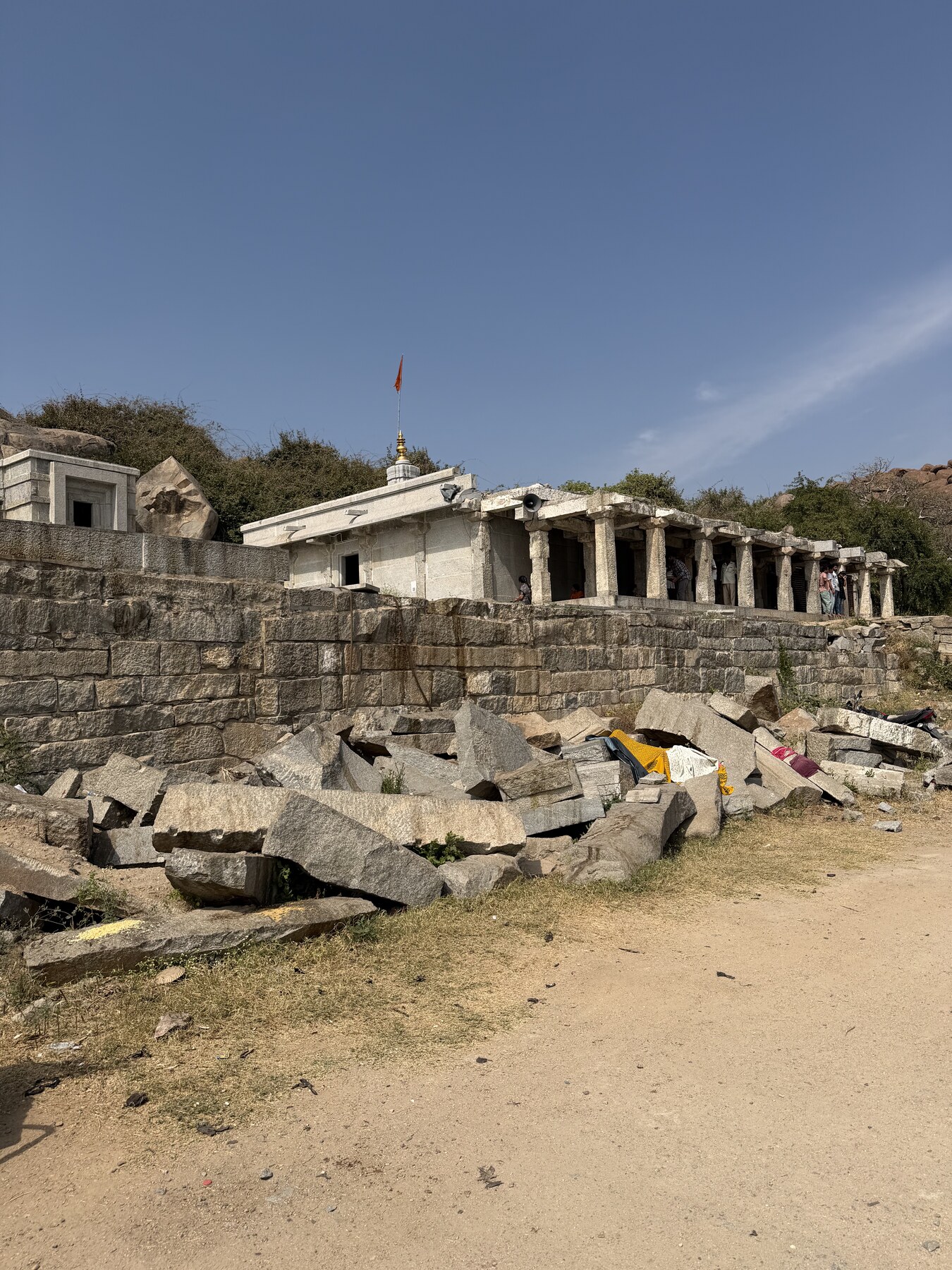
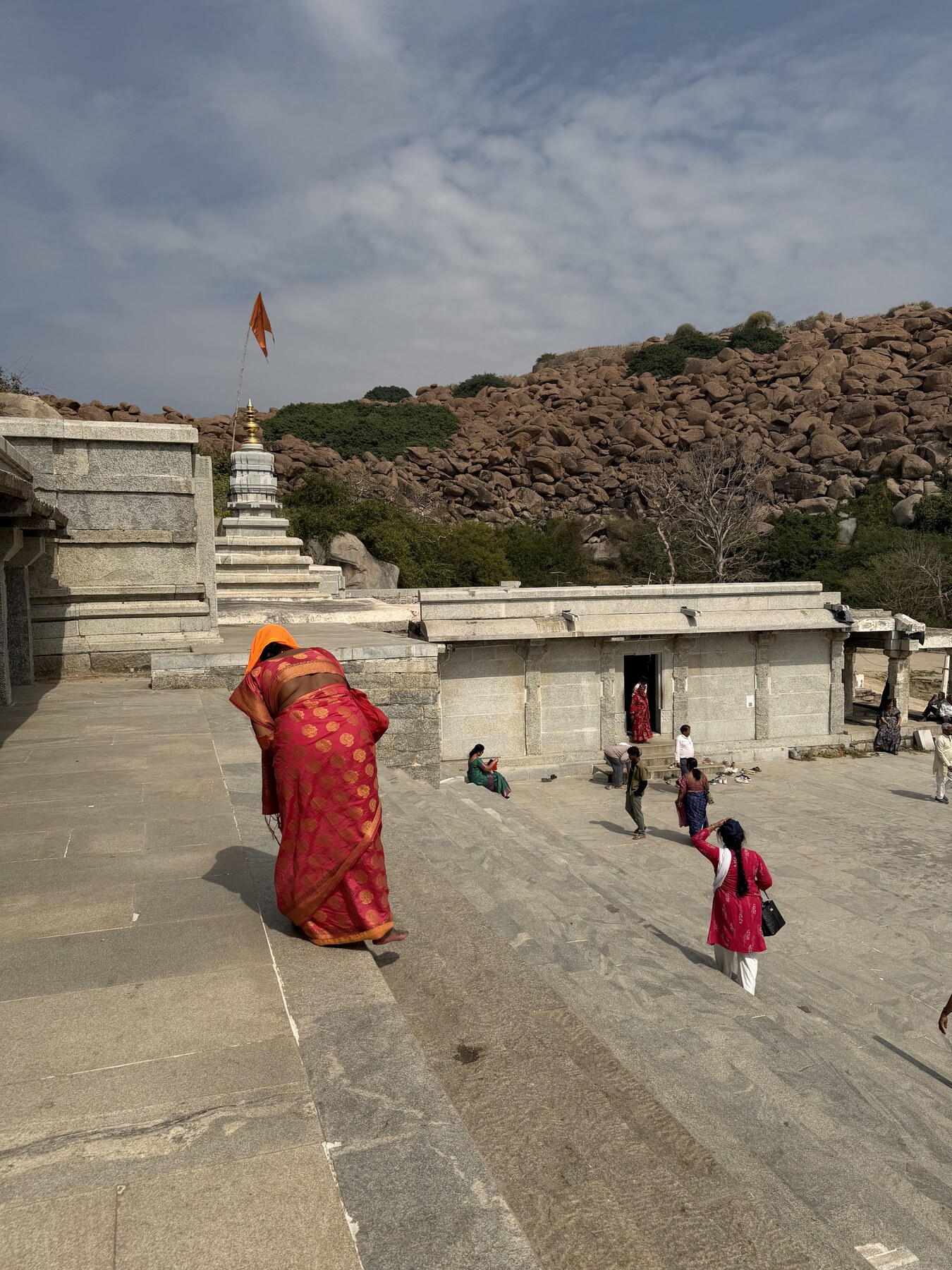
We are recording those details as local temple tradition, not as claims independently established by an inscription at this shrine. The broader historical setting is well known: Harihara—also remembered as Hakka—and Bukka are generally credited with founding Vijayanagara, with traditions and later records describing the counsel or assistance of Vidyaranya. Scholarship also debates how the foundation emerged from the political landscape that preceded the empire.
That distinction matters. The history establishes Hakka, Bukka and the fourteenth-century rise of Vijayanagara. The site tradition places a ritual beginning here, before Vijayalakshmi Devi. Together they explain why this modest shrine carries a memory much larger than its walls.
Pampa Sarovar: one of the five sacred lakes
Immediately in front of the temple is Pampa Sarovar. Karnataka Tourism identifies it as one of India's five sacred sarovars—the Panch Sarovar—and records the tradition that Pampa, a form of Parvati, performed penance here in devotion to Shiva.
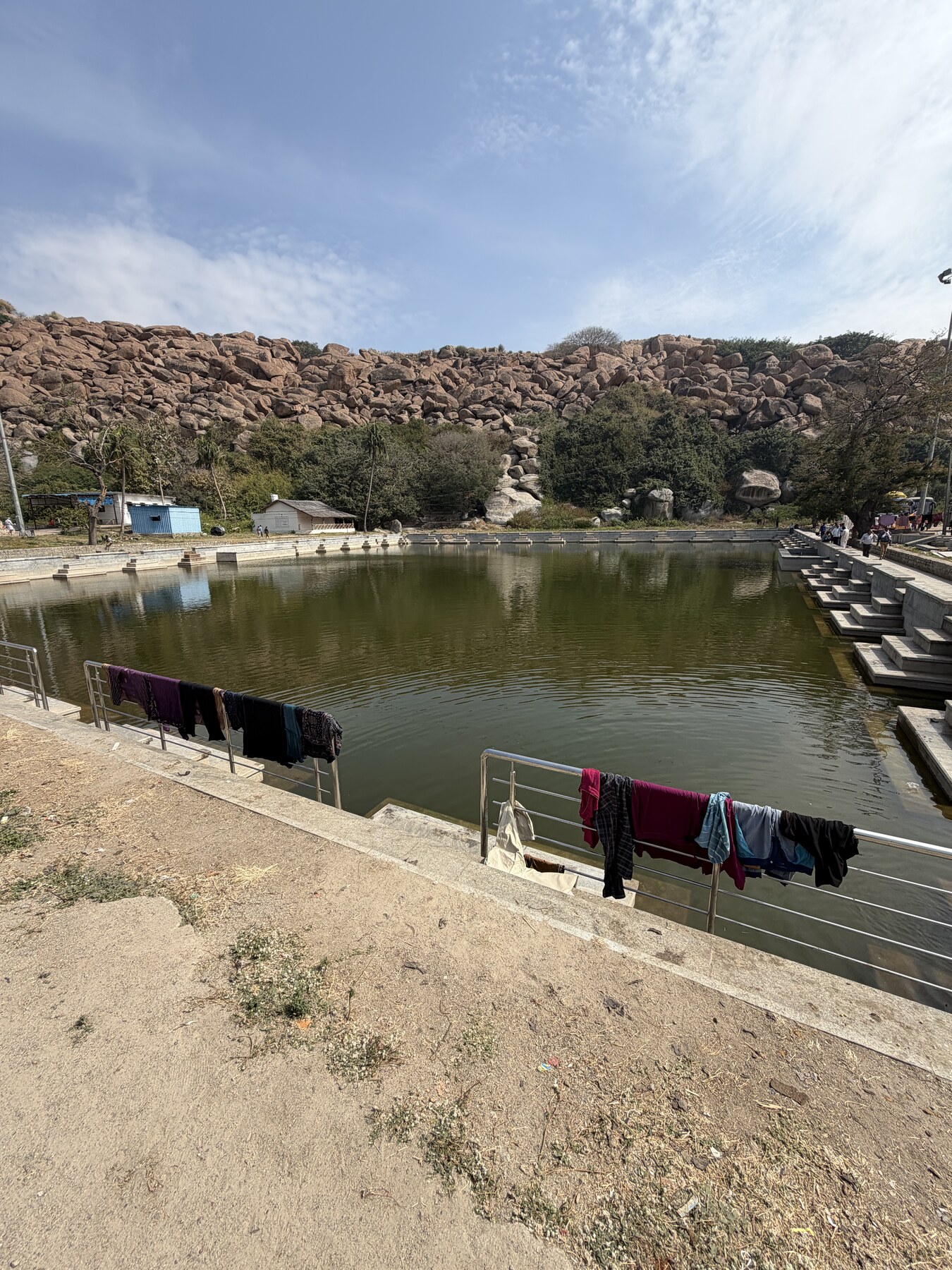
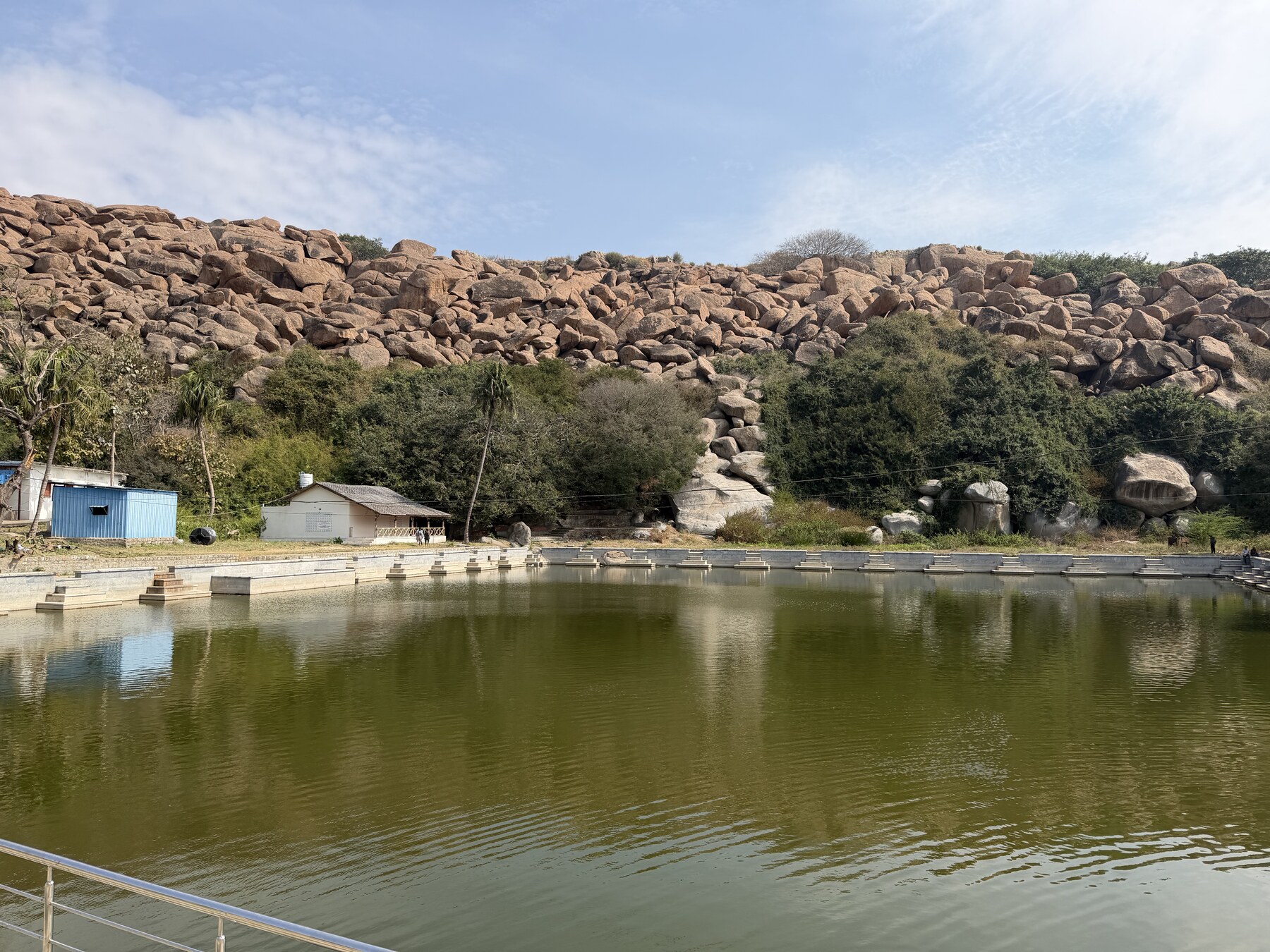
At the site, this is narrated in the chronology of the yugas. Pampa Devi's tapasya is placed in a sacred time deeper than ordinary historical dating. Our field narration describes that memory as reaching back before Satya Yuga. That is a statement of sacred chronology and local belief, not an archaeological date.
The water, temple and surrounding boulder hills make the story spatial. Pampa's devotion is not remembered as an abstract event. It is attached to a particular sarovar, a particular shrine and a landscape people still visit.
Rama, Lakshmana and the road to Rishimukha
The next layer belongs to the Ramayana landscape of Kishkindha. Tradition holds that Rama and Lakshmana passed Pampa Sarovar while travelling toward Rishimukha in their search for Sita. Shabari's meeting with Rama and her direction toward Sugriva place Pampa on the path to the alliance that follows.
The Government of Karnataka's Hampi tourism portal records Pampa Sarovar as the place where Shabari waited for Rama. The wider Hampi–Anegundi region continues to identify its hills, caves and water bodies through the Kishkindha narrative.
This is why the sarovar is more than a scenic pond. In the sacred geography of the region, it is a threshold: Rama's forest journey approaches the world of Hanuman and Sugriva here.
Shabari's cave
Beside the sarovar and temple is a cave identified locally with Shabari. Its entrance begins beneath a built stone shelter, then narrows into the natural rock.
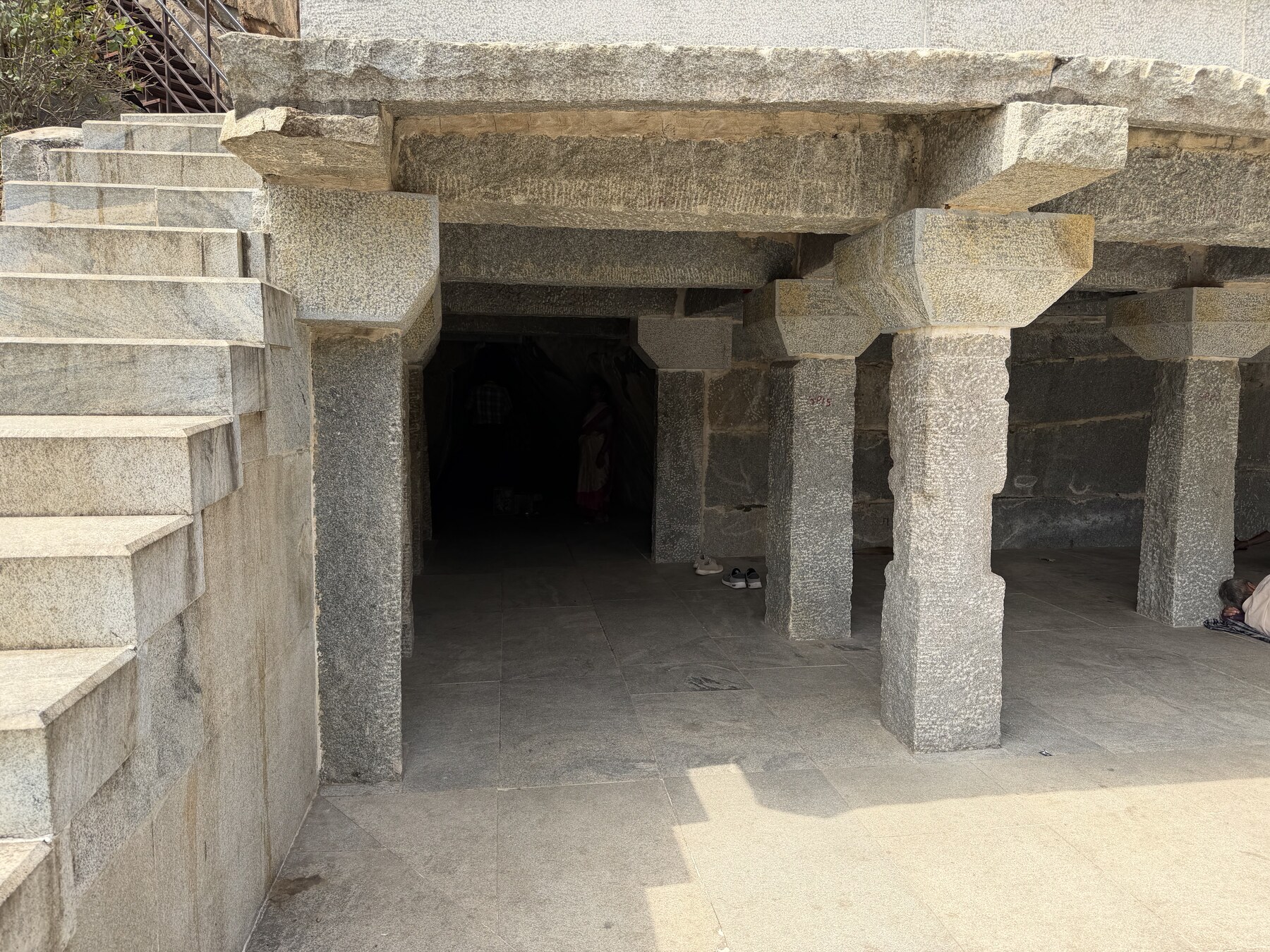
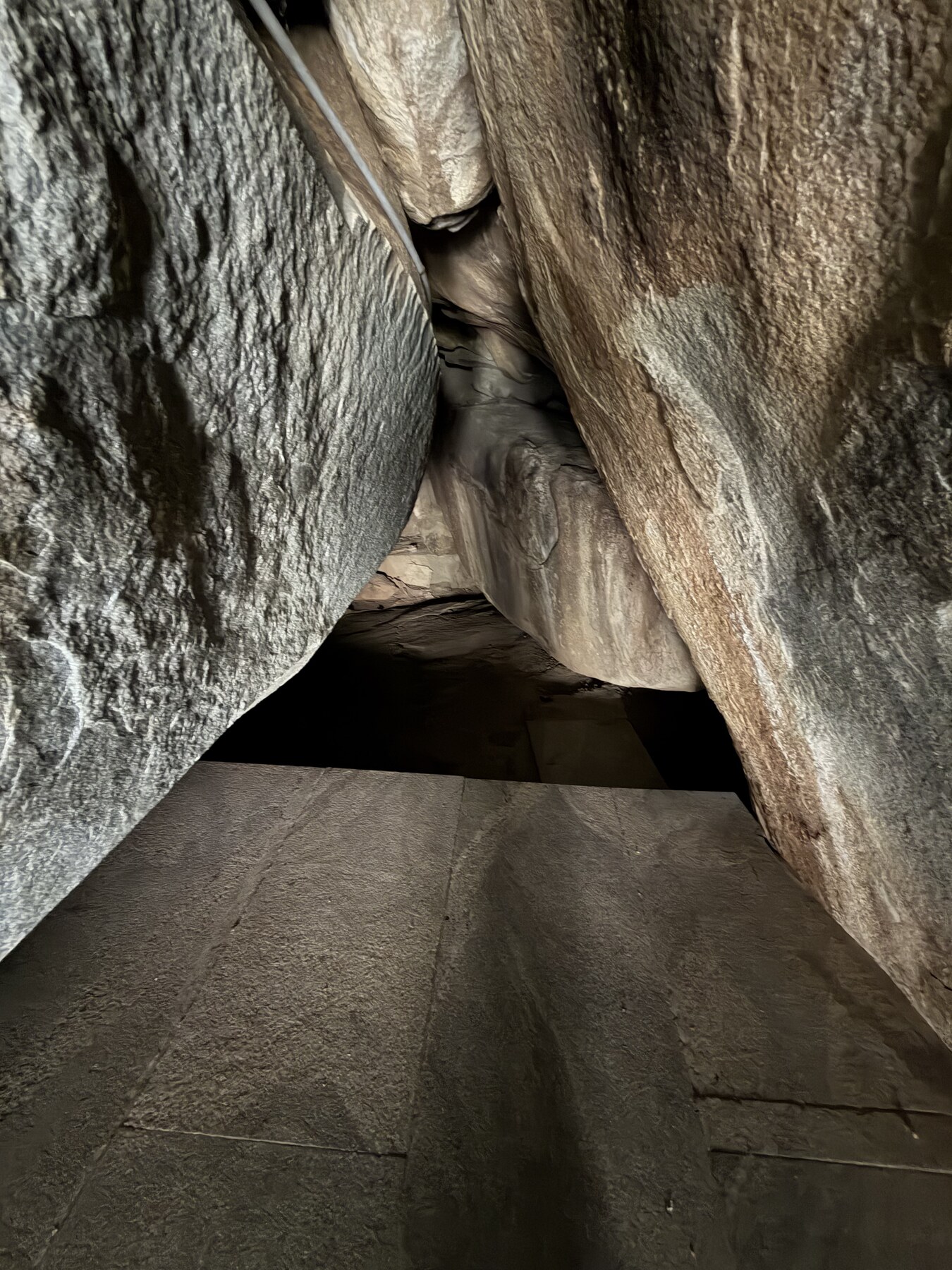
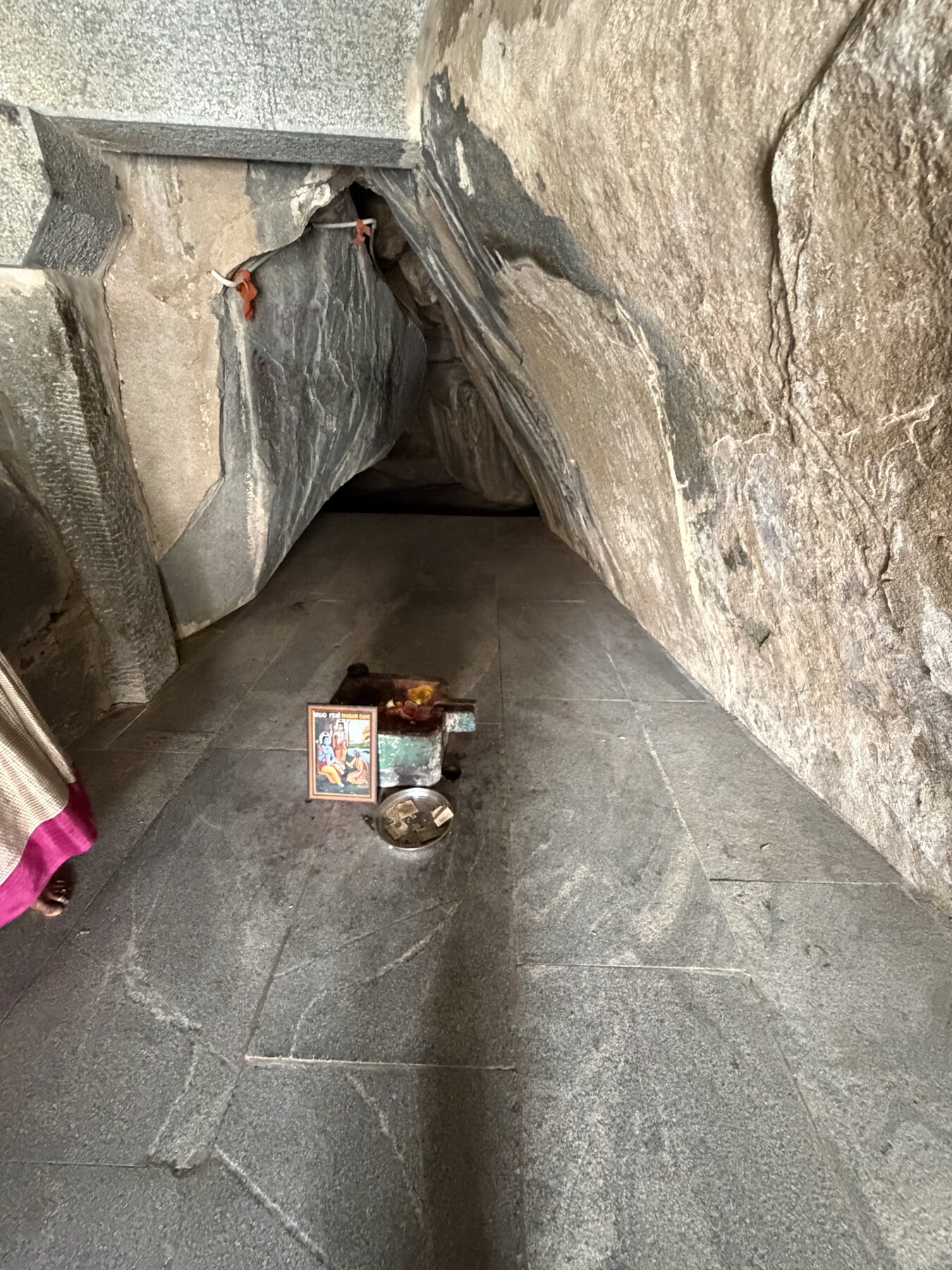
The living account describes Shabari as a tribal woman of profound devotion who served at this place for years: cleaning the sarovar area, gathering fresh berries each day and waiting for Rama. The berry story remains one of the most loved expressions of bhakti—an offering valued for the devotion behind it.
The physical cave is visible and visitable. Its identification with Shabari is the tradition maintained at Pampa Sarovar. We preserve both facts without confusing one for the other.
One place, three kinds of time
Pampa Sarovar brings together three temporal horizons:
- Sacred time: Pampa Devi's tapasya and the yuga chronology attached to the sarovar.
- Epic time: Rama, Lakshmana and Shabari in the Ramayana landscape of Kishkindha.
- Historical time: the rise of Vijayanagara in the fourteenth century and the local memory of Hakka, Bukka and Vidyaranya worshipping here.
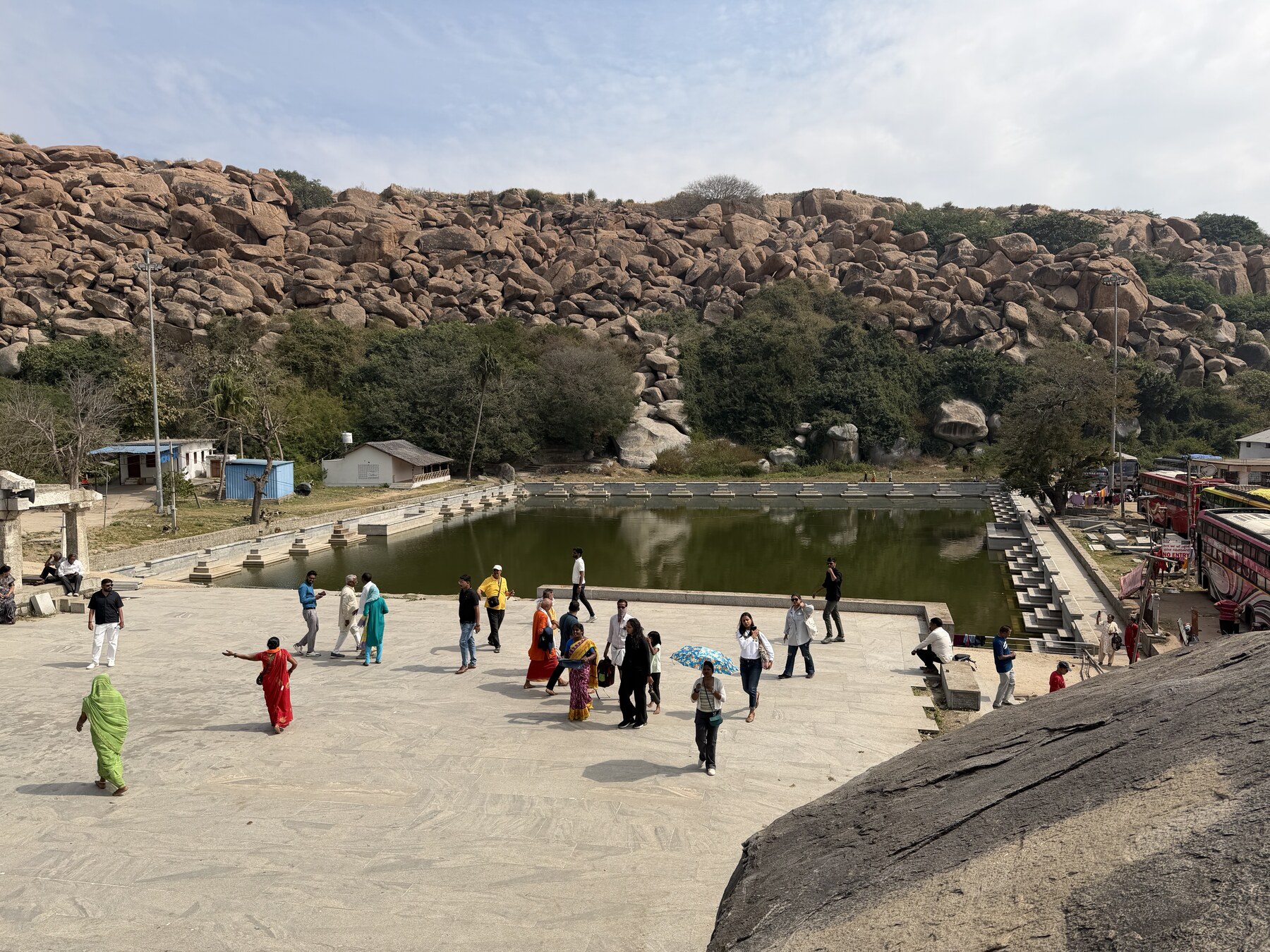
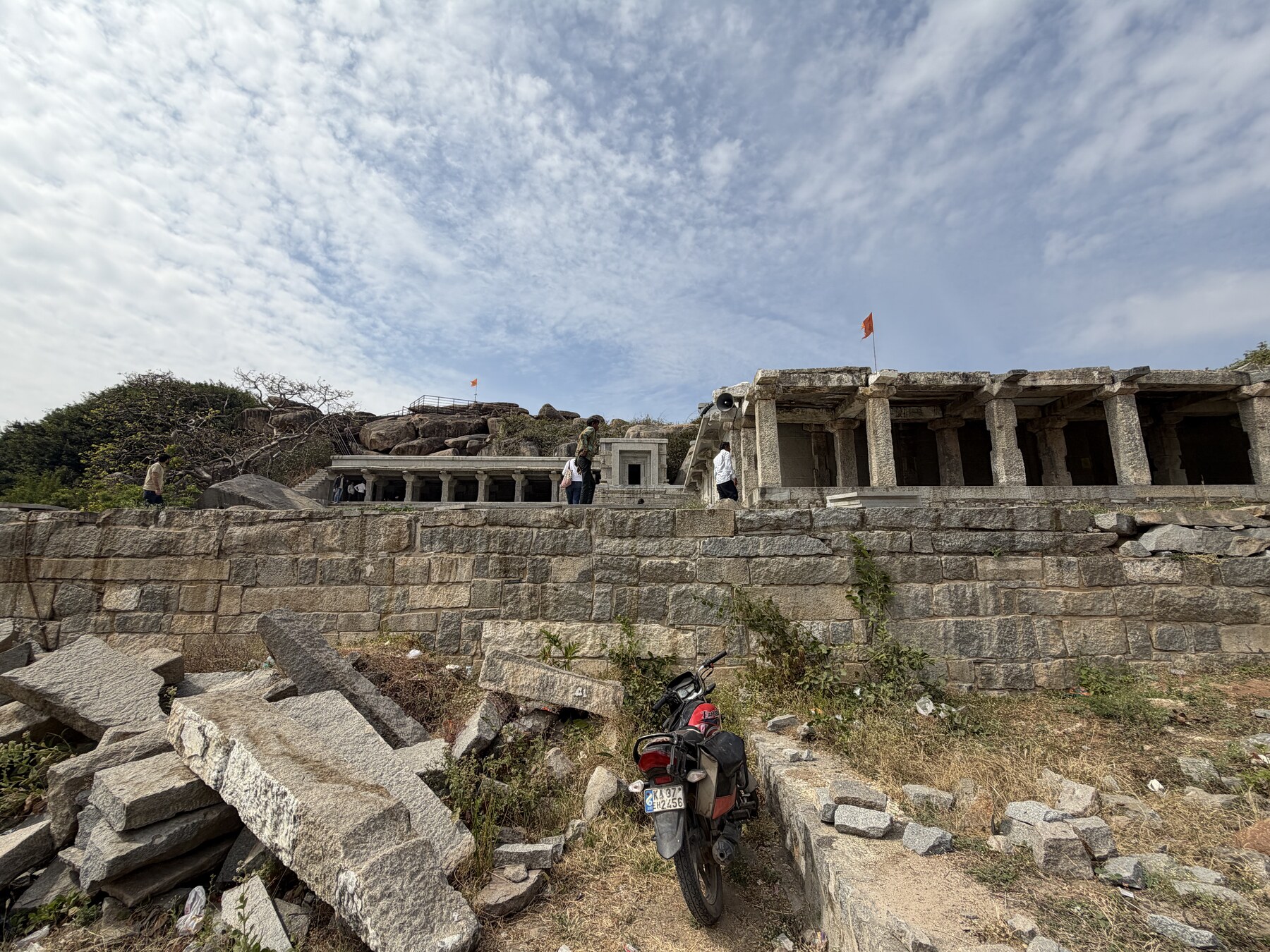
The power of the place comes from their coexistence. A visitor does not move from one story to another by travelling miles. The temple, sarovar and cave stand beside one another.
This is Nambikke: knowledge carried by a place through worship, retelling, repetition and return. It is not the same as a dated inscription. It should not be forced to become one. But it is part of the field record—what people here remember, preserve and continue to tell.
Source and field note
For the documented context used here:
- Karnataka Tourism's Koppal guide identifies Pampa Sarovar as one of the five sacred sarovars and records the Pampa Devi tradition.
- The Government of Karnataka Hampi tourism portal records the traditions connecting the sarovar with Pampa and Shabari.
- UNESCO's Group of Monuments at Hampi documents the fourteenth- to sixteenth-century Vijayanagara capital landscape.
- The IGNCA-hosted historical study Founders of Vijayanagara discusses Harihara, Bukka, Vidyaranya and the complexity of the empire's foundation.
The claim that Hakka and Bukka performed pooja at this particular temple, the derivation of Vijaya from Vijayalakshmi and the account of kings praying here before battle are presented as local folklore heard at the site. Further inscriptional or archival evidence would be needed to state them as settled historical facts.
Visitor note
Pampa Sarovar is an active sacred site. Dress and behave respectfully, follow instructions from temple caretakers and ask before photographing people or worship. Cave surfaces can be uneven and confined; enter only where access is permitted and use footwear with reliable grip. Conditions and access rules can change, so check locally.
Rishimukha Flashback Series
- S1/E1 — Jatayu, Rishimukha and Rama's Two Trails
- S1/E2 — Hanuman's Birthplace Has a Back Route
- S1/E3 — Kishkinda: The Monkey Kingdom
- S1/E4 — The Squirrels Still Chat at Kishkinda
- S1/E5 — The ASI Board and the Living Kingdom
- S1/E6 — Rishimukha: Two Geese Beside the Crossing
- S1/E7 — Inside Rishimukha: The Cave and the Swamiji
- S1/E8 — This Is Rishimukha. This Is Nambikke.
- S1/E9 — Hakka and Bukka Started the Vijayanagara Empire Here ← you are here
Watch S1/E9 on Instagram and follow @timelenspodcast for the next episode.


Comments
Post a Comment