S1/E8: An Empire Built a Bridge Here. A German Lady Is Buried Here. A Swamiji Has Lived Here for 100 Years. This Is Rishimukha. This Is Nambikke.
Rishimukha, near Anegundi and Hampi, Karnataka
Watch the S1/E8 field reel:
An empire built a bridge here. A German lady is buried here. A Swamiji has lived here for almost 100 years. This is Rishimukha. This is Nambikke.
The woman who never left
A foreigner—a German lady—came to Rishimukha. She believed the account of Sugriva's cave and Rama's alliance so deeply that she moved here. She built a small cottage and a small garden beside the cave.
She stayed until she died.
She is buried in her garden, right next to the cave at Rishimukha. She believed the account, made her life beside this place and never left.
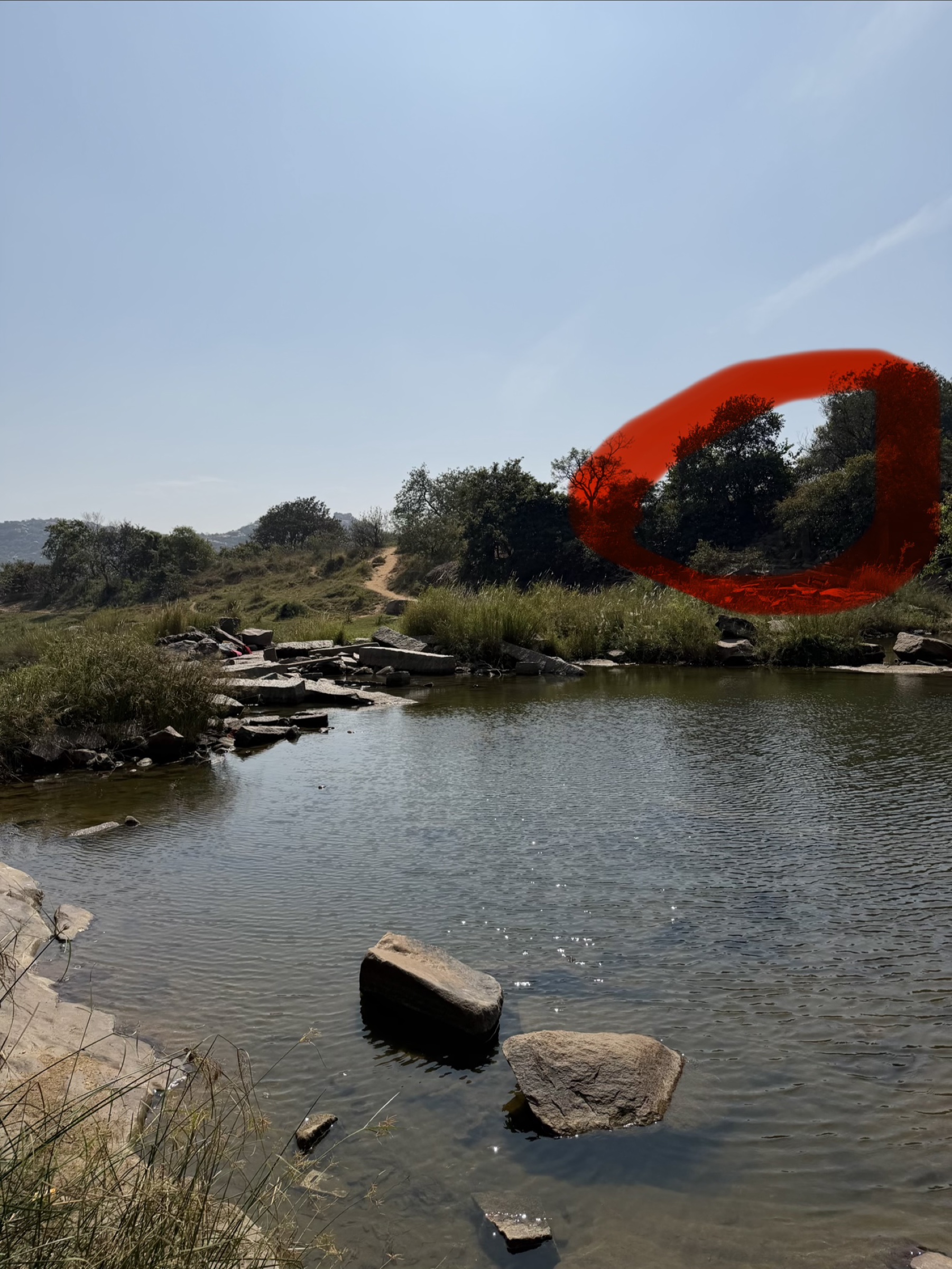
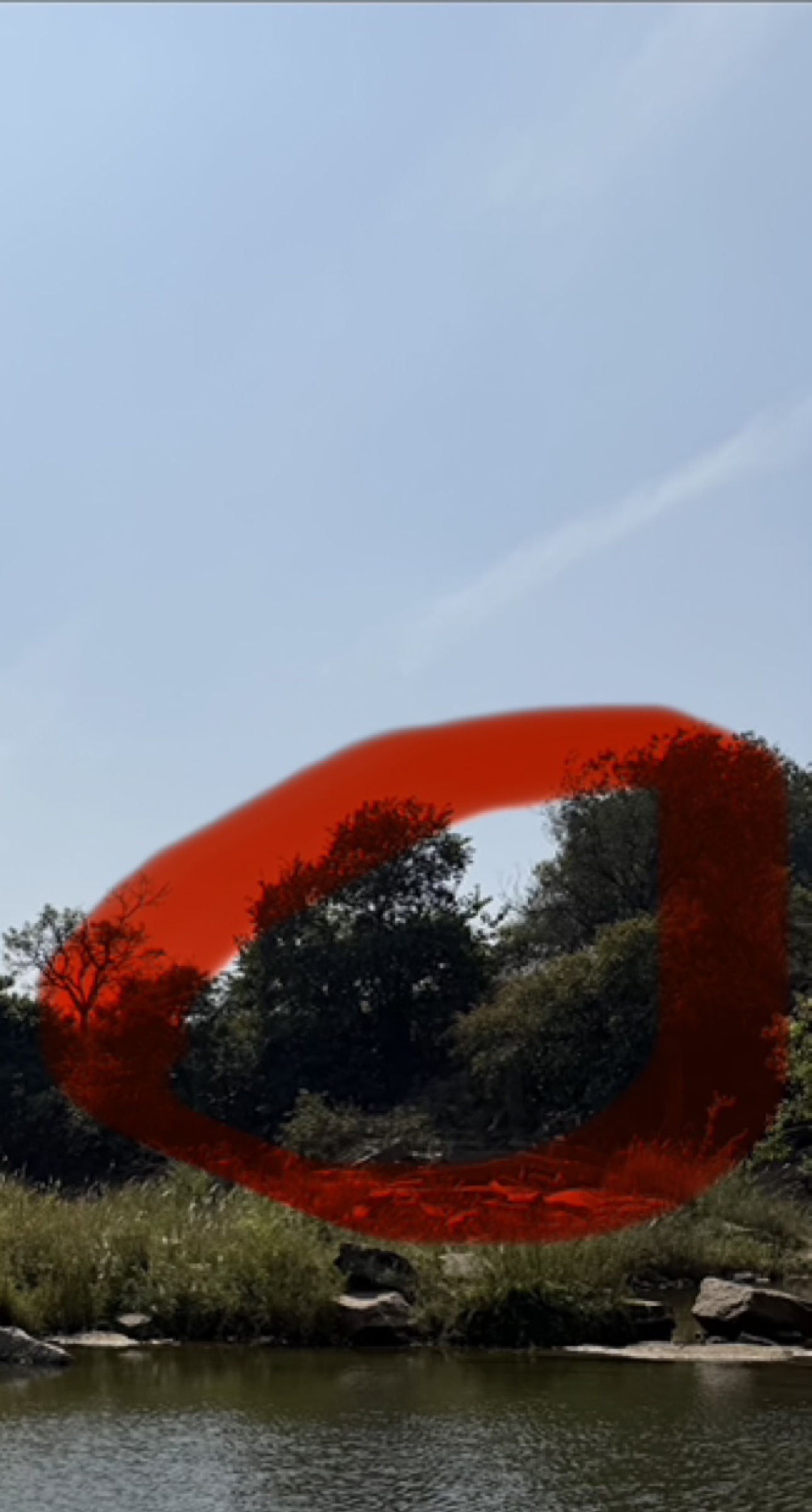
This account was told to us by Hanumanthappa Angadi, the guide who took us through this landscape. He lives in the village immediately beside Rishimukha. He grew up playing around this cave complex, spent time cleaning the caves as a child and personally pointed out the location of the woman's cottage, garden and burial place.
We are recording what he told us as local testimony attached to the site; we have not independently verified the woman's identity, nationality, burial record or the dates of her residence. That distinction does not diminish the field record. It tells us precisely what survives here as living memory.
The guide who grew up beside the cave
Hanumanthappa told us something else. As a child, while playing around and helping to clean this cave complex, he remembers that the Swamiji was already here—serving at the cave and receiving visitors. He is the same man who is almost 100 years old today.
Hanumanthappa is the same guide documented in our original Series 1/Episode 1 Hampi field post. He guides visitors through the ASI-protected Hampi landscape; his identification shown there describes him precisely as a Department of Tourism, Government of Karnataka–licensed local guide for Koppala district. The original post also includes Nagendra's photograph with him at Virupaksha Temple.

The guide's recollection connects his own childhood to the Swamiji's decades of service beside the cave. It does not establish the Swamiji's exact age as a documented fact, but it preserves something the guide could personally remember: the same person, the same cave and a continuity spanning generations.
Before taking the Swamiji's photograph, we asked his permission. We photographed him only after he agreed.
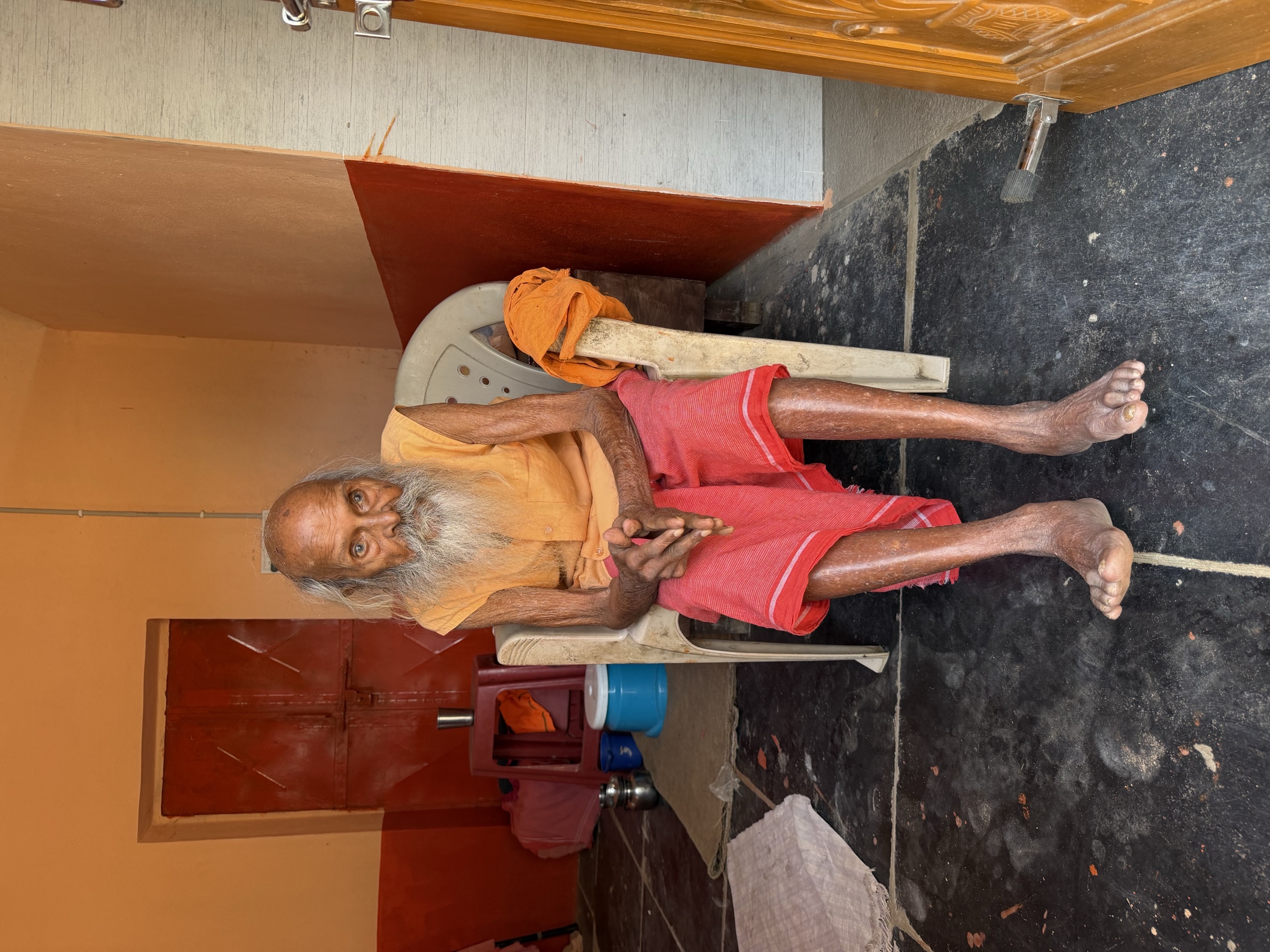
Three people are drawn into the story across three lifetimes: the woman who made her home beside the cave, the Swamiji who stayed and served there, and the guide who grew up next door, played around the caves, helped clean them as a child and still returns. Then there is a fourth thread.
The cave they all lived beside
From the entrance, the physical depth of the cave becomes visible. The chamber and rock are real and visitable. The identification of this place with Sugriva and Hanuman is the living tradition carried beside it.
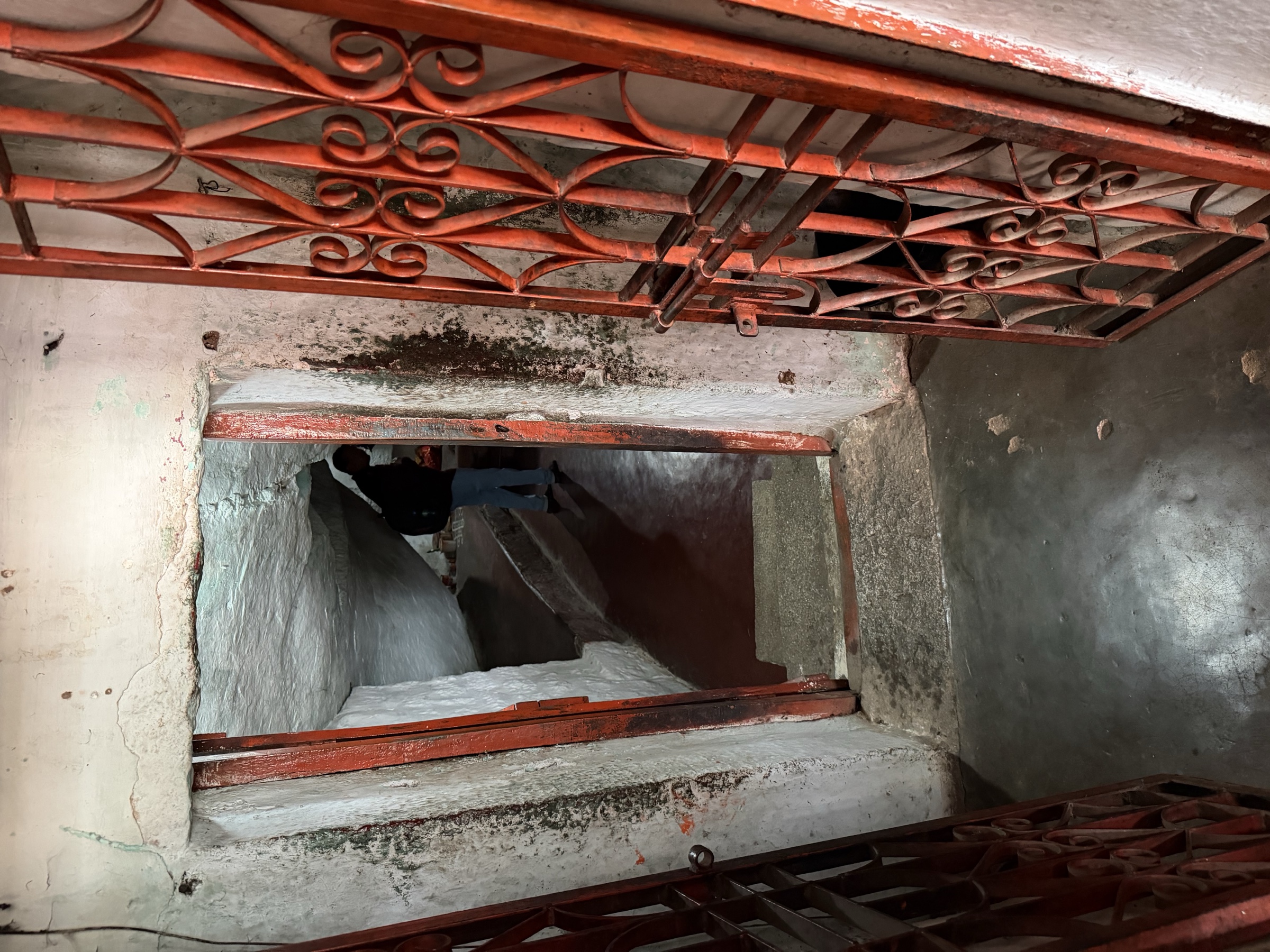
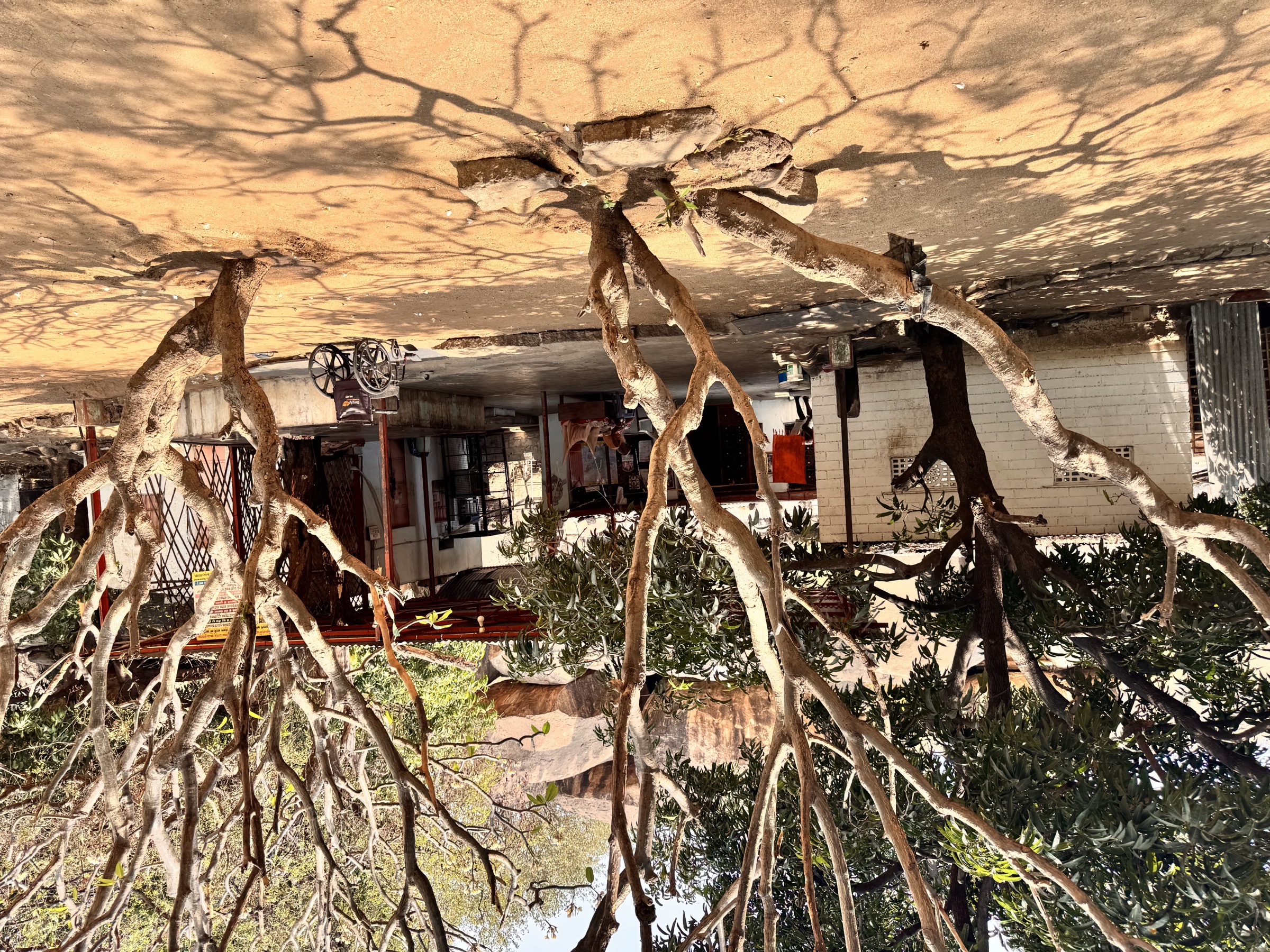
In the Kishkindha Kanda of the Valmiki Ramayana, Sugriva takes refuge at Rishyamuka because Vali fears the curse of Sage Matanga and will not enter the mountain. The text identifies Rishyamuka as Sugriva's refuge; the identification of this particular surviving cave is the local tradition maintained at the site.
The bridge to the Vijayanagara landscape
The stones and piers visible from Rishimukha were identified to us as the remains of an old bridge that once connected the island with the Hampi side of the river—the landscape of the Vijayanagara capital.
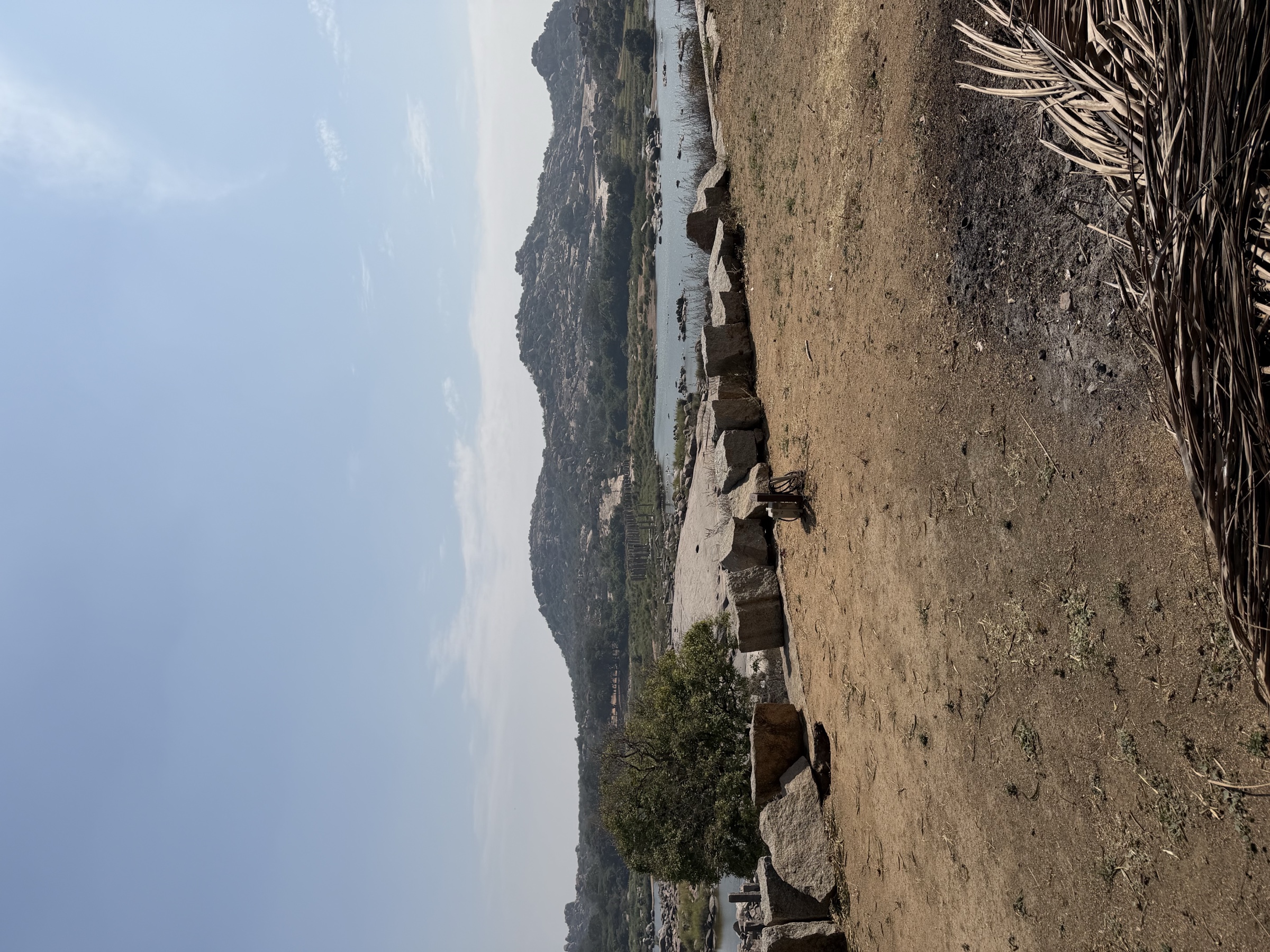
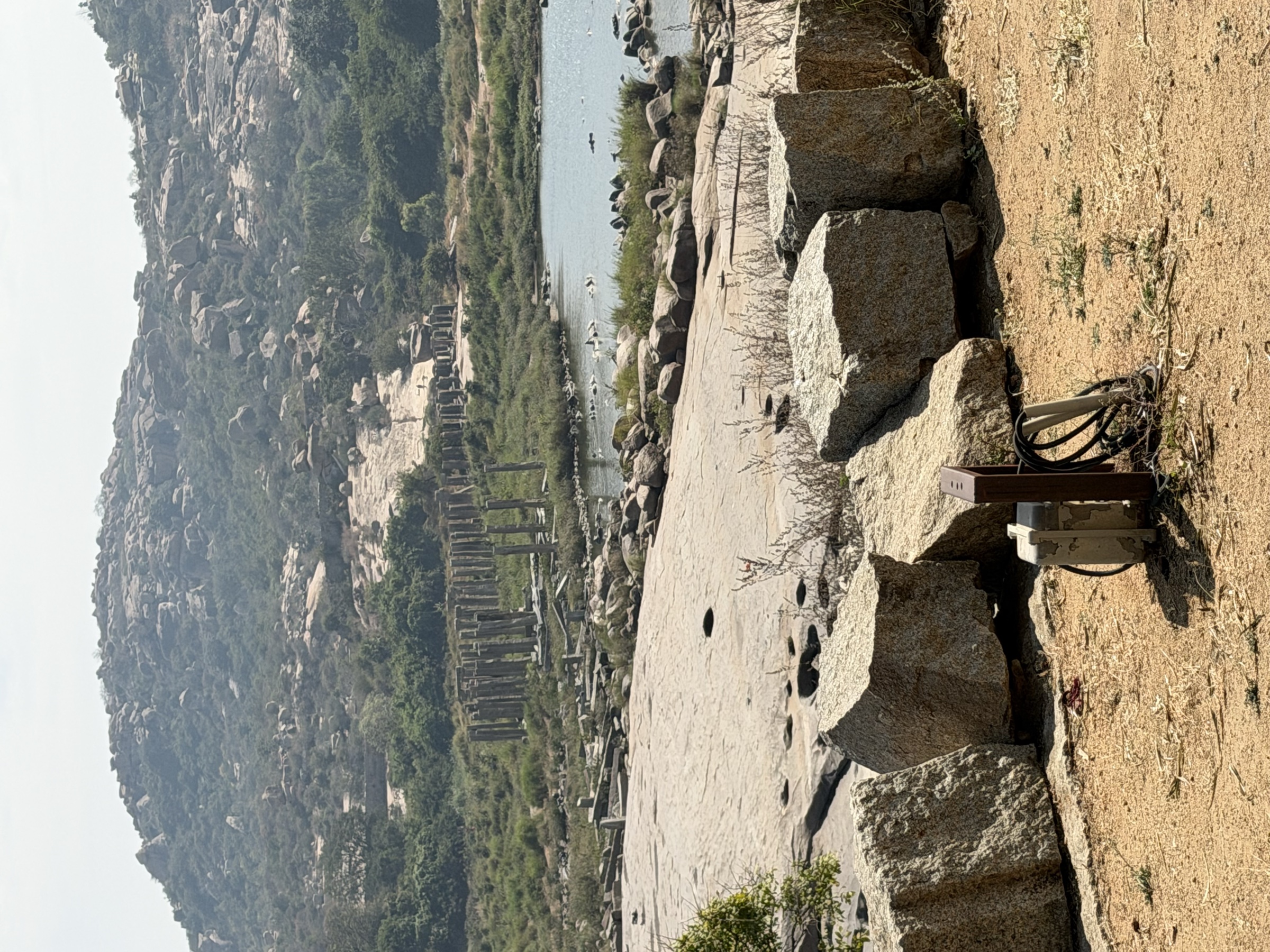
The Vijayanagara empire flourished in this region from the fourteenth century. A bridge tying Rishimukha to its capital landscape would show that the island mattered to people here centuries ago. The visible remains and their precise construction date require archaeological and documentary study; the stronger claim—that the bridge itself proves every part of the local tradition—would go beyond what this field visit can establish.
But the field question remains powerful: why was this island worth reaching?
Four threads at one place
- A Swamiji who has lived here for almost 100 years.
- A German lady remembered as being buried in her garden beside the cave.
- A guide who cleaned the cave as a child and still returns.
- An empire remembered through a bridge built to reach the island.
Rishimukha has always been known—by those who knew.
This is Nambikke: knowledge that lives in a place, carried through service, memory, residence and return. The bridge remains are Lipi in stone—a physical trace that can be studied. The people and the belief that never left are Nambikke.
Unbroken. Unchanged.
Visitor note
Access conditions can change. Check locally before crossing toward Rishimukha, use footwear with reliable grip and avoid entering confined or wet rock areas without local guidance. Treat residents, caretakers and burial places respectfully. Always ask permission before photographing people.
Rishimukha Flashback Series
- S1/E1 — Jatayu, Rishimukha and Rama's Two Trails
- S1/E2 — Hanuman's Birthplace Has a Back Route
- S1/E3 — Kishkinda: The Monkey Kingdom
- S1/E4 — The Squirrels Still Chat at Kishkinda
- S1/E5 — The ASI Board and the Living Kingdom
- S1/E6 — Rishimukha: Two Geese Beside the Crossing
- S1/E7 — Inside Rishimukha: The Cave and the Swamiji
- S1/E8 — This Is Rishimukha. This Is Nambikke. ← you are here
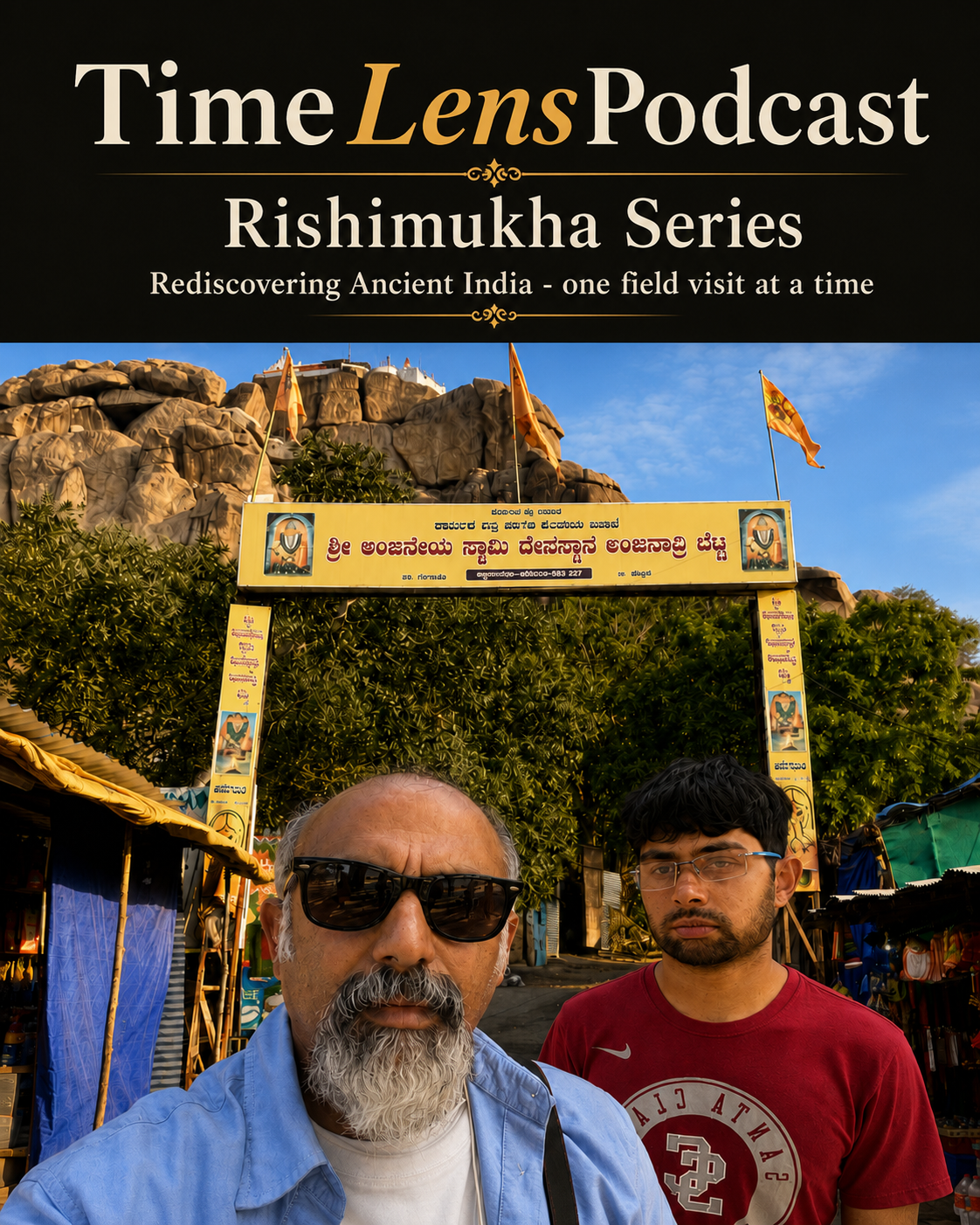
Watch S1/E8 on Instagram and follow @timelenspodcast.


Comments
Post a Comment